



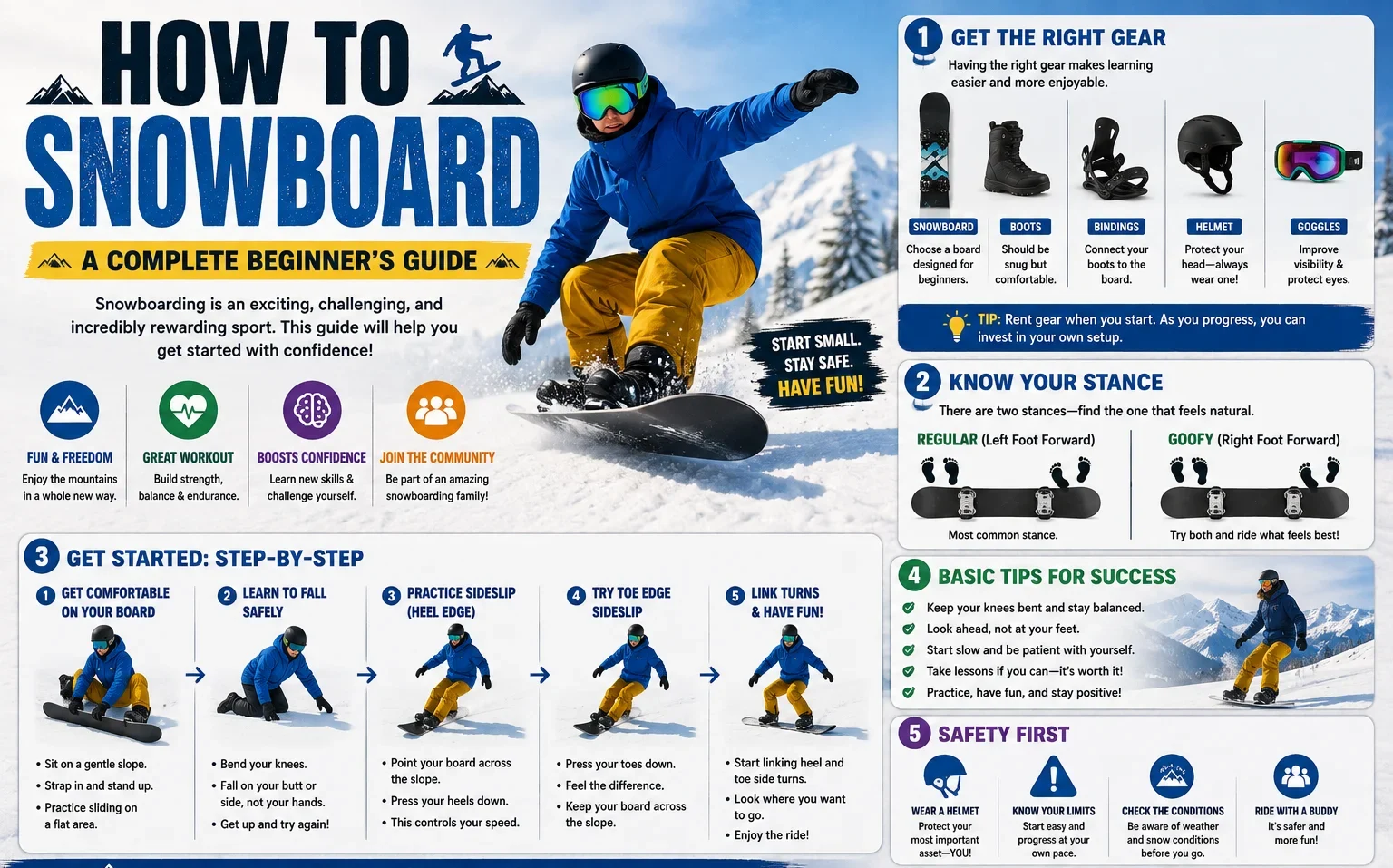
How to Snowboard: A Complete Beginner’s Guide
Snowboarding is an exciting winter sport that combines balance, skill, and adventure. Whether you want to cruise down gentle slopes or eventually master tricks in the terrain park, learning the basics is the first step toward becoming a confident rider. While snowboarding may seem challenging at first, most beginners can learn the fundamentals with patience, practice, and the right techniques.
What Is Snowboarding?
Snowboarding is a winter sport where riders stand sideways on a single board and slide down snow-covered slopes. Unlike skiing, both feet remain attached to one board using bindings.
Snowboarding has become one of the world’s most popular winter sports because it’s fun, versatile, and suitable for people of different ages and fitness levels.
Benefits of Learning to Snowboard
Learning to snowboard offers many physical and mental benefits, including:
- Improves balance and coordination
- Strengthens leg and core muscles
- Boosts confidence
- Provides excellent cardiovascular exercise
- Encourages outdoor activity during winter
- Offers endless opportunities for progression
Essential Snowboarding Equipment
Before hitting the slopes, make sure you have the proper gear.
Snowboard
Choose a beginner-friendly snowboard that matches your height and weight. Softer boards are generally easier to control and forgive mistakes.
Snowboard Boots
Comfortable boots are essential. Your boots should fit snugly without causing pain or restricting circulation.
Bindings
Bindings connect your boots to the snowboard. They should be adjusted properly to provide comfort and control.
Helmet
A certified snow sports helmet is one of the most important pieces of safety equipment.
Goggles
Snowboard goggles protect your eyes from wind, snow, and harmful UV rays while improving visibility.
Waterproof Clothing
Dress in layers using waterproof and breathable clothing, including:
- Snow jacket
- Snow pants
- Waterproof gloves
- Thermal base layers
- Warm socks
Choosing Your Snowboarding Stance
Before riding, determine which foot naturally goes in front.
There are two common stances:
- Regular: Left foot forward
- Goofy: Right foot forward
A simple way to find your stance is to have someone gently push you from behind. The foot you naturally step forward with is usually your front foot.
Learn the Basic Snowboarding Position
Your riding stance affects your balance and control.
Keep these tips in mind:
- Bend your knees slightly.
- Keep your back straight.
- Relax your shoulders.
- Look ahead instead of down.
- Keep your weight centered over the board.
A relaxed posture makes learning much easier.
How to Strap Into Your Snowboard
Most beginners strap in while sitting on the snow.
Follow these steps:
- Sit comfortably.
- Attach your front foot.
- Slide your boot fully into the binding.
- Tighten the ankle strap.
- Secure the toe strap.
- Stand carefully before attaching your back foot when ready.
Practice strapping in several times before heading onto the lift.
Learning to Skate with One Foot
Before using chairlifts, you’ll need to learn how to move with one foot attached.
Basic Skating Technique
- Attach only your front foot.
- Push yourself with your free foot.
- Glide on flat terrain.
- Practice stopping safely.
This skill makes getting around the resort much easier.
Mastering Balance on the Snowboard
Balance is the foundation of snowboarding.
Try practicing on a gentle slope by standing with both feet strapped in and shifting your weight from heel edge to toe edge.
Avoid leaning backward, as this often causes beginners to lose control.
How to Stop on a Snowboard
Stopping safely is one of the first skills every snowboarder should learn.
Heel Edge Stop
Most beginners learn this first.
- Face uphill.
- Shift weight onto your heels.
- Lift your toes slightly.
- Dig the heel edge into the snow until you stop.
Toe Edge Stop
Once comfortable, practice stopping using your toe edge.
- Face downhill.
- Press your toes into the snow.
- Lean slightly toward the slope.
- Slow down gradually.
Practice both stopping methods before attempting longer runs.
Learning Your First Turns
Turning allows you to control speed and direction.
Heel-to-Toe Turn
- Begin on your heel edge.
- Shift your weight gradually.
- Rotate your shoulders toward the new direction.
- Roll onto your toe edge.
Toe-to-Heel Turn
Repeat the process in reverse while keeping movements smooth and controlled.
Small, controlled turns are easier than large, aggressive ones.
Linking Turns Together
Once you’ve mastered individual turns, begin connecting them.
Linked turns help:
- Control speed
- Improve balance
- Increase confidence
- Navigate different slopes
Practice on beginner-friendly green runs until turning feels natural.
Riding the Chairlift
Chairlifts can seem intimidating for beginners.
Remember these tips:
- Remove your back foot before loading.
- Sit back when the chair arrives.
- Keep your snowboard pointed straight.
- Raise the safety bar.
- At the top, stand smoothly and glide away.
Most resorts have staff available to assist first-time riders.
Common Beginner Mistakes
Nearly every new snowboarder makes a few mistakes.
Looking Down
Always look where you want to go instead of staring at your board.
Standing Too Straight
Bent knees absorb bumps and improve balance.
Leaning Back
Many beginners lean backward out of fear, making the board harder to control.
Skipping Lessons
Professional instruction often speeds up learning and helps build good habits from the start.
Snowboarding Safety Tips
Safety should always come first.
- Wear a helmet every ride.
- Stay within your skill level.
- Respect trail signs.
- Yield to riders downhill.
- Keep a safe distance from others.
- Check weather conditions before riding.
- Stay hydrated throughout the day.
- Take breaks when tired.
How to Build Confidence Faster
Improvement comes with consistent practice.
Some helpful strategies include:
- Practice on beginner slopes.
- Take one skill at a time.
- Watch experienced riders.
- Consider beginner lessons.
- Ride regularly throughout the season.
- Stay patient with yourself.
Every snowboarder falls while learning. Treat each fall as part of the learning process.
Beginner Snowboarding Exercises
Improving your fitness can make snowboarding easier.
Focus on exercises such as:
Squats
Build leg strength and stability.
Planks
Strengthen your core for better balance.
Lunges
Improve flexibility and lower-body control.
Balance Training
Practice standing on one foot or using a balance board to improve coordination.
FAQs
How long does it take to learn snowboarding?
Most beginners can learn basic stopping and turning within one to three days. Becoming comfortable on various slopes usually takes several weeks of practice.
Is snowboarding harder than skiing?
Many people find snowboarding more difficult during the first day but easier to progress after learning the basics. Individual experiences vary.
What should beginners wear when snowboarding?
Wear waterproof outer layers, insulated clothing, gloves, a helmet, goggles, and moisture-wicking base layers to stay warm and dry.
Can adults learn snowboarding?
Yes. People of almost any age can learn to snowboard with proper instruction, suitable equipment, and regular practice.
Final Thoughts
Learning how to snowboard is an exciting journey that rewards patience and persistence. By choosing the right equipment, mastering proper stance, practicing safe stopping techniques, and gradually learning turns, you’ll quickly build the confidence needed to enjoy the slopes. Remember that every experienced snowboarder started as a beginner, so don’t be discouraged by falls or slow progress. Stay consistent, prioritize safety, and most importantly, have fun while developing your snowboarding skills. With practice, you’ll soon be carving down the mountain with confidence and enjoying everything this incredible winter sport has to offer.