




How to Wash Wool Blanket : Easy Steps to Protect It
Wool blankets are warm, comfortable, durable, and naturally insulating, making them a popular choice for bedrooms and cozy living spaces. However, wool fibers require more care than ordinary cotton or synthetic fabrics. Washing a wool blanket incorrectly can cause shrinking, stretching, fading, or even permanent damage to its soft texture.
The good news is that cleaning a wool blanket does not have to be difficult. With the right method, gentle products, and a little patience, you can keep your blanket fresh and protect its natural fibers. This guide explains how to wash a wool blanket safely and how to dry and store it properly.
Check the Care Label First
Before washing your wool blanket, always check the manufacturer’s care label. Different types of wool can have different cleaning requirements. Some blankets are machine washable, while others may require hand washing or professional dry cleaning.
Look for Washing Instructions
The care label may recommend:
- Hand washing only
- Machine washing on a wool or delicate cycle
- Cold water
- Dry cleaning
- Air drying
- No tumble drying
Following these instructions is the safest way to avoid damaging your blanket. If the label specifically says “dry clean only,” avoid washing it at home.
Prepare the Wool Blanket
Before washing, inspect the blanket carefully. Remove loose dirt, dust, hair, and other debris. You can gently shake the blanket outdoors or use a soft brush to remove surface particles.
Treat Stains Before Washing
If you notice stains, avoid rubbing them aggressively. Rubbing can push dirt deeper into wool fibers and may cause the material to become rough or distorted.
Instead, gently blot the affected area with a clean, damp cloth. For stubborn stains, use a small amount of wool-safe detergent diluted with cool water. Test the solution on a hidden area first to make sure it does not affect the color.
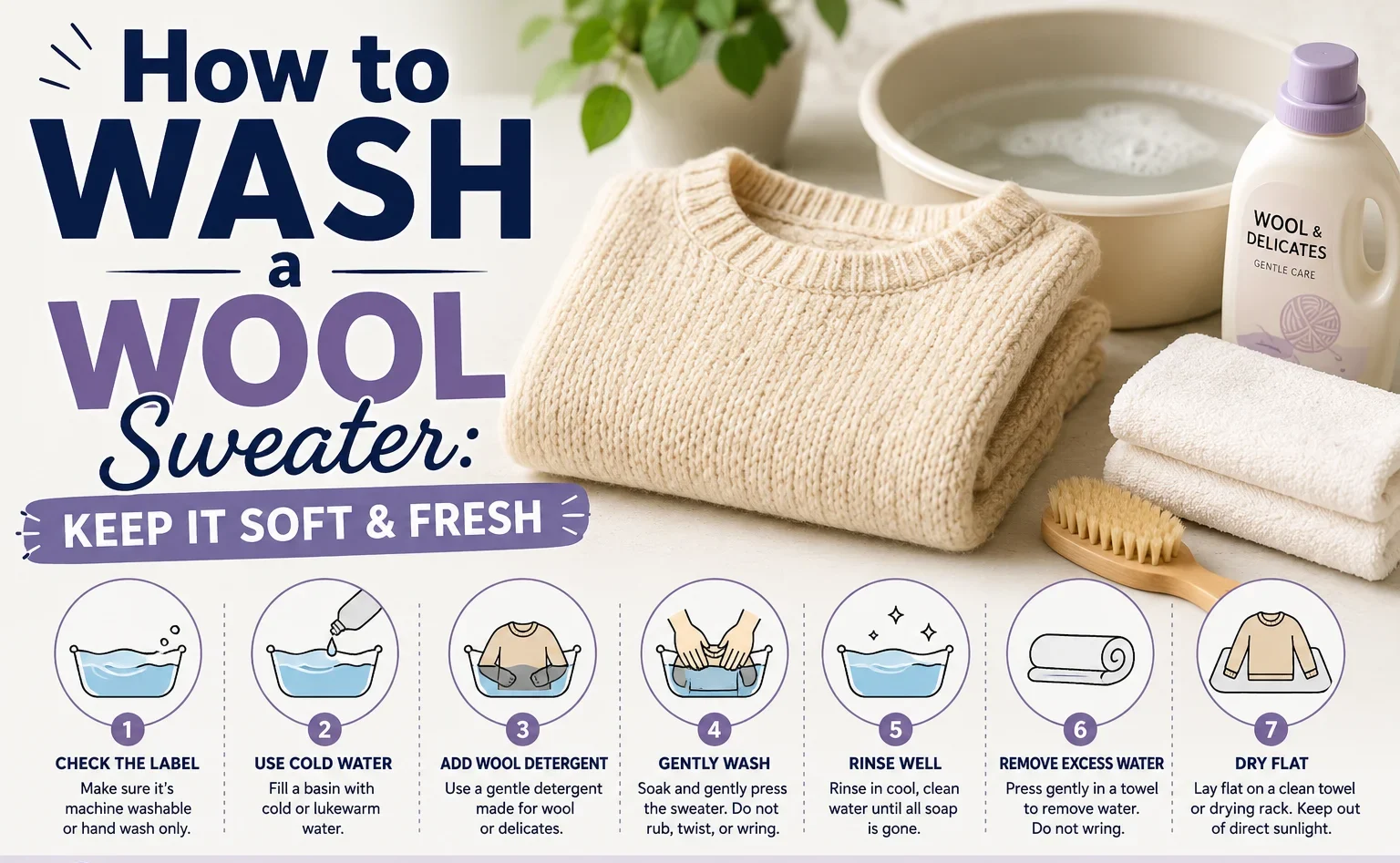
How to Hand Wash a Wool Blanket
Hand washing is one of the gentlest methods for cleaning wool. It gives you better control over water temperature and movement, which can help protect delicate fibers.
Step 1: Fill a Tub With Cool Water
Fill a clean bathtub, large basin, or washing container with cool or lukewarm water. Avoid hot water because heat can cause wool fibers to shrink and become tightly felted.
Step 2: Add Wool-Safe Detergent
Add a small amount of detergent specifically designed for wool or delicate fabrics. You do not need a large amount of soap. Too much detergent can be difficult to rinse away and may leave the blanket feeling stiff.
Step 3: Submerge the Blanket
Place the blanket into the water and gently press it down until it is completely wet. Let it soak according to the detergent instructions, usually for around 10 to 15 minutes.
Do not scrub, twist, or aggressively move the blanket. Gentle handling is important because excessive friction can damage wool fibers.
Step 4: Rinse Thoroughly
Drain the soapy water and refill the container with cool, clean water. Gently press the blanket through the water to remove detergent.
Repeat the process until the water runs clear and no visible soap remains.
How to Machine Wash a Wool Blanket
Some wool blankets can be washed in a washing machine, but only if the care label allows it.
Choose the Right Settings
Use the wool, delicate, or gentle cycle with cold water. Select a low-spin setting if your machine provides that option.
Avoid regular or heavy-duty cycles because they use more agitation, which can stretch, shrink, or felt wool.
Use the Right Detergent
Choose a mild wool-safe detergent. Avoid bleach, strong stain removers, and harsh laundry products unless the manufacturer specifically recommends them.
Fabric softener is generally unnecessary because wool has naturally soft fibers. Strong chemicals may also affect the blanket’s texture or appearance.
Remove Excess Water Carefully
One of the most important steps after washing is removing excess water without damaging the blanket.
Never Twist or Wring Wool
Avoid twisting or wringing a wet wool blanket. Wet wool becomes heavier and more vulnerable to stretching.
Instead, gently press the blanket to remove water. You can also place it between clean towels and press lightly. The towels will absorb excess moisture without putting too much stress on the fibers.
Dry the Blanket Properly
Correct drying is just as important as washing. Improper drying can cause a wool blanket to lose its shape.
Lay It Flat
The best method is usually to lay the blanket flat on a clean, dry surface. Reshape it gently while it is still damp.
Avoid hanging a heavy, wet wool blanket from a clothesline or hanger because its weight can cause it to stretch.
Keep It Away From High Heat
Do not place wool directly beside a heater, radiator, or other strong heat source. High temperatures can cause shrinking and damage the natural fibers.
If the blanket is being dried indoors, choose a well-ventilated area. Turn it occasionally so that moisture can escape evenly.
How Often Should You Wash a Wool Blanket?
Wool blankets generally do not need frequent washing. Wool naturally resists odors and can stay fresh longer than many other fabrics.
Wash Only When Necessary
Consider washing your blanket when it becomes visibly dirty, develops an odor, or has stains that cannot be removed through gentle spot cleaning.
Between washes, regularly air the blanket outdoors or in a well-ventilated room. This can help refresh it without exposing the fibers to unnecessary washing.
Common Mistakes to Avoid
Several common laundry habits can damage wool.
Avoid These Problems
Do not use hot water, harsh detergents, bleach, vigorous scrubbing, or high-heat drying. Also avoid wringing or hanging a heavy wet blanket.
Another mistake is putting a wool blanket into a washing machine without checking the care label. Even if another wool item is machine washable, your particular blanket may have different requirements.
How to Store a Wool Blanket
Once your blanket is completely dry, fold it neatly and store it in a cool, dry place. Make sure there is no remaining moisture because dampness can encourage mildew and unpleasant odors.
For long-term storage, use a breathable cotton storage bag rather than an airtight plastic container. Keep the blanket away from direct sunlight and areas where moisture levels are high.
Final Thoughts
Learning how to wash a wool blanket properly can help extend its life and preserve its natural softness. The key is gentle care: use cool water, wool-safe detergent, minimal agitation, careful rinsing, and flat drying.
Always check the care label before starting, especially if the blanket is valuable, handmade, or labeled dry clean only. With the right cleaning routine, your wool blanket can remain warm, comfortable, and beautiful for many years.