




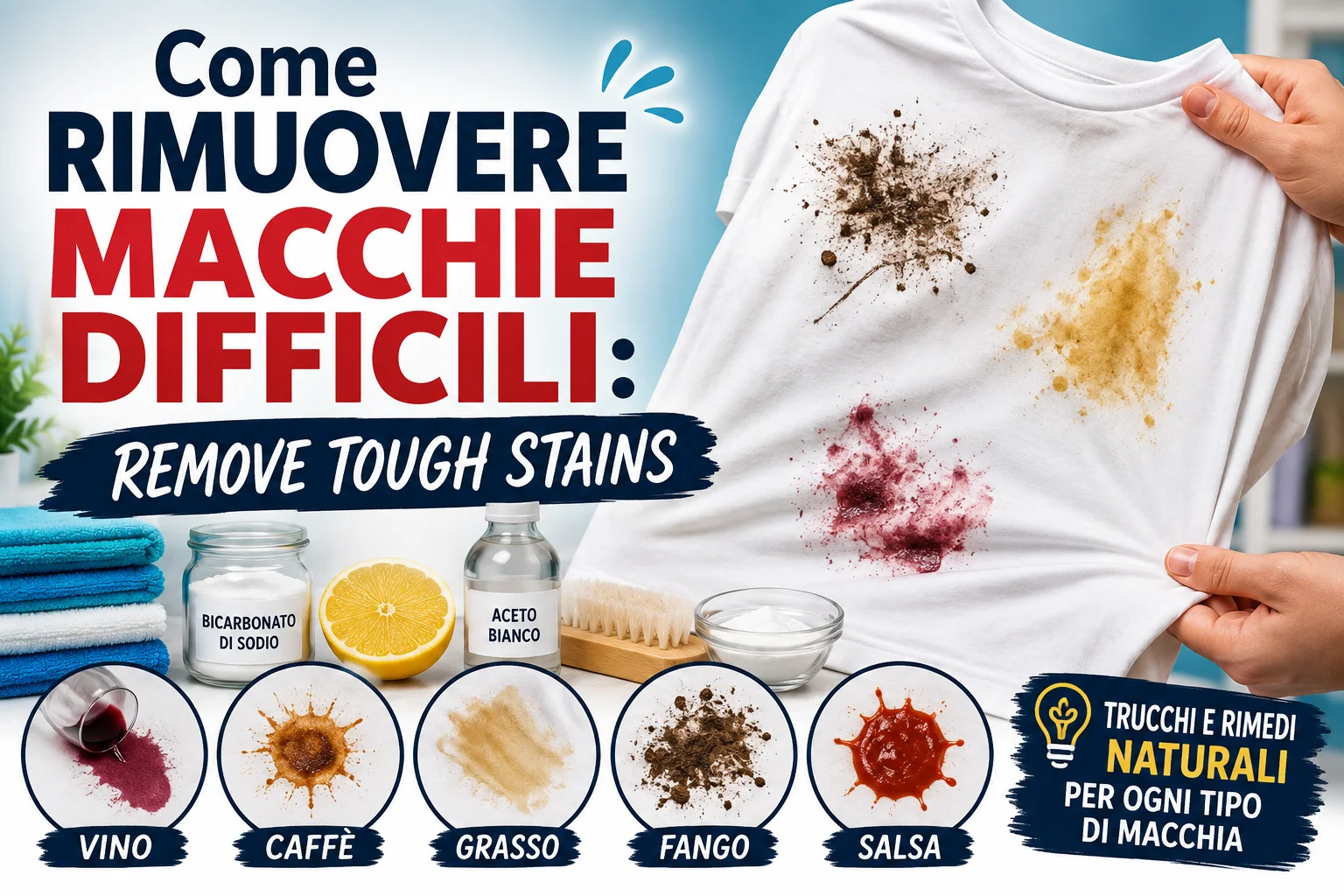
Come Rimuovere Macchie Difficili: Remove Tough Stains
Removing stubborn stains can feel frustrating, especially when they appear on your favorite clothes, carpets, furniture, or kitchen surfaces. The good news is that most tough stains can be removed with the right techniques and cleaning products. Whether you’re dealing with coffee, wine, grease, ink, blood, or grass stains, knowing how to treat them quickly makes all the difference.
This guide explains the best methods to come rimuovere macchie difficili (remove tough stains), using simple household ingredients and proven stain-removal techniques.
Why Tough Stains Are Difficult to Remove
Not all stains are the same. Some penetrate deep into fabric fibers, while others chemically bond with the material. The longer a stain remains untreated, the harder it becomes to remove.
Common causes include:
- Food and beverage spills
- Oil and grease
- Ink and markers
- Blood and sweat
- Mud and grass
- Makeup and cosmetics
- Pet accidents
- Rust and hard water deposits
Understanding the type of stain helps you choose the most effective cleaning solution.
General Rules Before Treating Any Stain
Before using any cleaning product, follow these important guidelines.
Act Quickly
Fresh stains are much easier to remove than dried ones. Blot the stain immediately rather than rubbing it.
Test Cleaning Products First
Always test any cleaner on a hidden area to ensure it won’t damage or discolor the material.
Read Fabric Labels
Different fabrics require different cleaning methods. Delicate materials such as silk and wool need gentle treatment.
Avoid Heat
Do not place stained clothing in the dryer until the stain is completely gone. Heat can permanently set many stains.
Household Ingredients That Remove Tough Stains
Many everyday products work surprisingly well against stubborn stains.
White Vinegar
White vinegar helps dissolve mineral deposits, deodorize fabrics, and remove many food stains.
Best for:
- Coffee stains
- Tea stains
- Sweat marks
- Hard water stains
Baking Soda
Baking soda absorbs odors and gently scrubs away dirt without damaging most surfaces.
Ideal for:
- Grease
- Sweat stains
- Carpet stains
- Kitchen surfaces
Dish Soap
Dishwashing liquid cuts through oils and grease quickly.
Works well on:
- Cooking oil
- Butter
- Makeup
- Salad dressing
Hydrogen Peroxide
Hydrogen peroxide helps remove organic stains and brighten white fabrics.
Effective against:
- Blood
- Wine
- Grass
- Sweat stains
How to Remove Common Tough Stains
Coffee and Tea Stains
Coffee contains tannins that can permanently stain fabrics.
Steps:
- Blot excess liquid.
- Rinse with cold water.
- Apply dish soap mixed with white vinegar.
- Let it sit for 15 minutes.
- Wash normally.
Red Wine Stains
Wine stains should be treated immediately.
Use this method:
- Blot the spill.
- Sprinkle baking soda or salt over the stain.
- Pour a little sparkling water.
- Wash using stain remover before laundering.
Grease and Oil Stains
Oil spreads quickly through fabric fibers.
Best treatment:
- Cover the stain with baking soda.
- Leave for 30 minutes.
- Brush away the powder.
- Apply dish soap directly.
- Wash in warm water if safe for the fabric.
Ink Stains
Ink can be challenging but not impossible to remove.
Try this process:
- Place paper towels beneath the stain.
- Dab rubbing alcohol onto the ink.
- Blot repeatedly.
- Wash immediately afterward.
Blood Stains
Always use cold water for blood stains.
Never use hot water because it sets the proteins permanently.
Steps include:
- Rinse with cold water.
- Apply hydrogen peroxide.
- Let bubbles work for several minutes.
- Rinse thoroughly.
- Wash normally.
Grass Stains
Grass contains chlorophyll, making stains difficult.
Treatment:
- Rub liquid detergent into the stain.
- Allow it to soak.
- Wash with the warmest water suitable for the fabric.
Removing Tough Stains from Carpets
Carpet fibers trap dirt deeply, requiring careful cleaning.
Food Stains
Mix:
- Two cups warm water
- One tablespoon dish soap
- One tablespoon white vinegar
Blot the stain with the solution instead of scrubbing.
Pet Stains
Use baking soda to absorb moisture and odor.
After vacuuming, spray a vinegar-water solution before blotting dry.
Mud Stains
Allow mud to dry first.
Vacuum loose dirt before cleaning with mild detergent.
Removing Tough Stains from Upholstery
Furniture requires gentle cleaning.
Safe steps:
- Vacuum loose debris.
- Use a microfiber cloth.
- Apply upholstery cleaner sparingly.
- Blot instead of rubbing.
- Air dry naturally.
Always check manufacturer instructions before cleaning upholstered furniture.
Kitchen Stain Removal Tips
Kitchen stains often involve grease, food, and hard water.
Greasy Countertops
Clean using:
- Warm water
- Dish soap
- Microfiber cloth
For stubborn grease, sprinkle baking soda before wiping.
Burnt Cookware
Fill the pan with water and vinegar.
Bring to a boil, then add baking soda after removing from heat.
The residue loosens easily.
Stainless Steel
Clean with vinegar followed by a dry microfiber cloth for a streak-free finish.
Natural vs Commercial Stain Removers
Both options have advantages.
Natural Cleaners
Benefits include:
- Eco-friendly
- Budget-friendly
- Safe for most homes
- Fewer harsh chemicals
Limitations:
- May require repeated applications
- Less effective on old stains
Commercial Products
Advantages:
- Fast results
- Designed for specific stains
- Strong cleaning power
Disadvantages:
- Higher cost
- Some contain strong chemicals
- May damage delicate fabrics if misused
Mistakes to Avoid
Many people accidentally make stains worse.
Avoid these common mistakes:
- Rubbing instead of blotting
- Using hot water on protein stains
- Waiting too long before cleaning
- Mixing incompatible cleaning chemicals
- Skipping fabric testing
- Drying stained clothing before inspection
Simple precautions greatly improve stain-removal success.
Preventing Tough Stains
Prevention is always easier than cleanup.
Helpful habits include:
- Treat spills immediately.
- Use washable placemats and tablecloths.
- Apply fabric protectors to upholstery.
- Vacuum carpets regularly.
- Clean kitchen grease weekly.
- Keep stain remover available at home.
Routine maintenance reduces permanent staining.
FAQs
What is the best homemade stain remover?
A combination of white vinegar, baking soda, and dish soap works well for many household stains.
Can old stains still be removed?
Yes. Older stains may require repeated treatments or specialized stain removers, but many can still be significantly reduced.
Does baking soda remove all stains?
No. Baking soda is excellent for odors and grease but works best when combined with other cleaning agents for tougher stains.
Should I use hot or cold water?
Cold water is best for blood, dairy, and protein stains. Warm water works better for grease and oil after pretreatment.
How can I remove stains without damaging fabric?
Always read the care label, test cleaners on a hidden area, and avoid harsh scrubbing.
Conclusion
Learning how to come rimuovere macchie difficili doesn’t require expensive equipment or professional cleaning services. With quick action, the right household ingredients, and proper stain-removal techniques, you can successfully remove tough stains from clothing, carpets, upholstery, kitchens, and bathrooms. By understanding each stain type and following the correct cleaning method, you’ll keep your home and fabrics looking fresh, clean, and well-maintained for years to come.



One thought on “Come Rimuovere Macchie Difficili: Remove Tough Stains”