
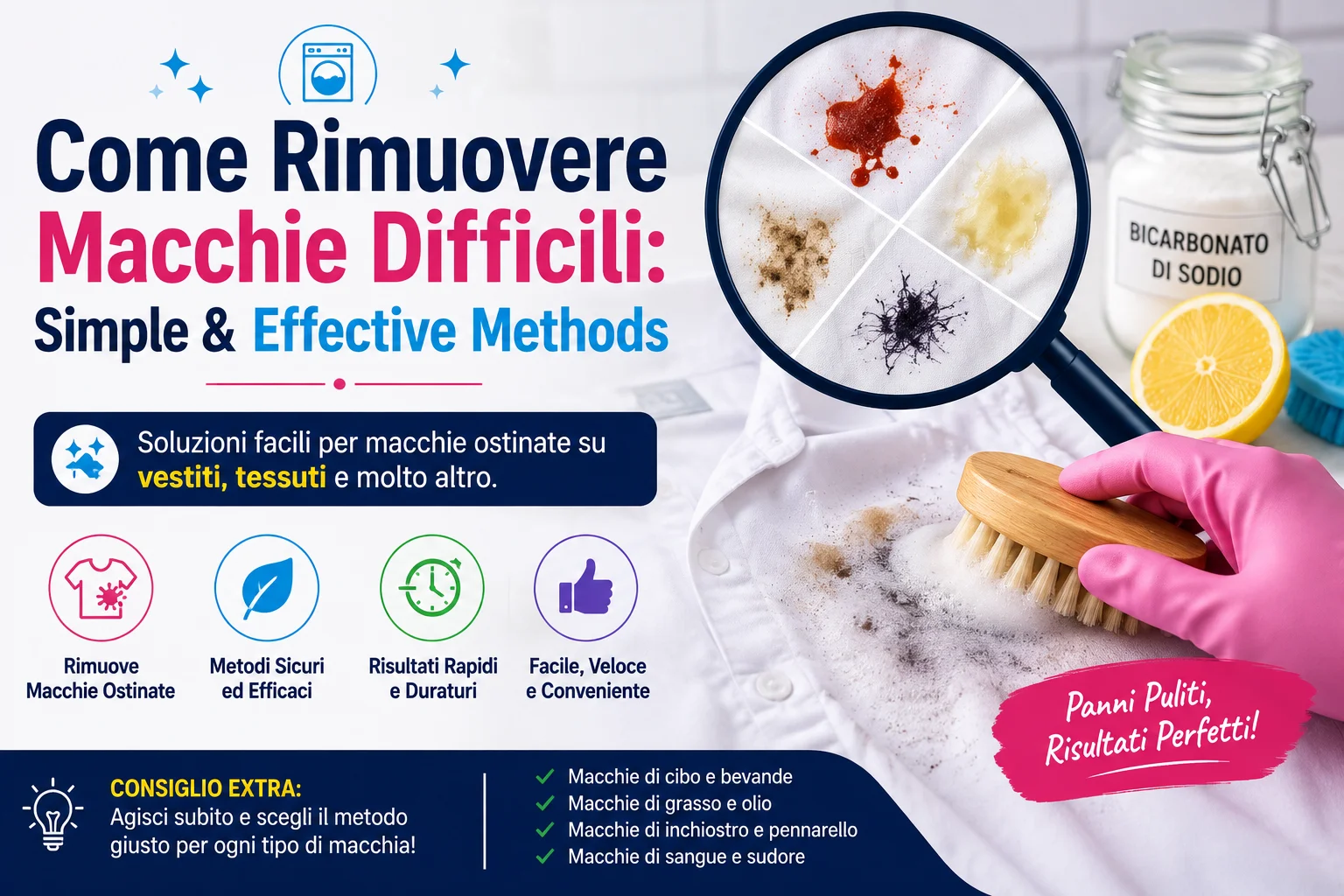
Tough stains are one of the most common household cleaning problems. A small spill from coffee, wine, oil, sauce, ink, or makeup can quickly become a stubborn mark if it is not treated properly. Fortunately, knowing the right stain removal techniques can make the cleaning process much easier.
The best approach depends on the type of stain, the material affected, and how long the stain has been there. Acting quickly is usually the most important step. With a few simple household products and the right method, you can remove many difficult stains without damaging your clothes, carpets, furniture, or other surfaces.
Why Some Stains Are So Difficult to Remove
Not all stains behave in the same way. Some contain oils that stick to fabric fibers, while others contain pigments or proteins that become harder to remove after drying.
Fresh Stains vs. Dried Stains
Fresh stains are generally easier to treat because the substance has not had enough time to penetrate deeply into the material. A quick response can prevent the stain from becoming permanent.
Dried stains may require repeated treatment. However, you should avoid aggressive scrubbing because it can damage fibers and spread the stain further.
Identify the Stain First
Before choosing a cleaning method, determine what caused the stain. Grease requires a different treatment from coffee, blood, ink, or red wine.
It is also important to identify the material. Cotton, polyester, wool, silk, leather, carpet, and upholstery all have different cleaning requirements.
How to Remove Oil and Grease Stains
Oil and grease stains are particularly stubborn because they do not dissolve easily in water. They are common on clothing, kitchen fabrics, and upholstery.
Use Dish Soap
Start by gently removing excess oil with a paper towel. Do not rub the area because this can push the grease deeper into the fibers.
Apply a small amount of liquid dish soap directly to the stain. Gently work it into the affected area and let it sit for approximately 10 to 15 minutes.
Rinse with warm water if the fabric allows it, then wash normally. Always check the stain before putting the item in a dryer because heat can make remaining grease marks much harder to remove.
How to Remove Coffee and Tea Stains
Coffee and tea stains are common on clothing, tablecloths, carpets, and upholstery.
Blot the Spill Quickly
Use a clean cloth or paper towel to absorb as much liquid as possible. Avoid rubbing because it can spread the stain.
Mix a small amount of mild laundry detergent with cool or lukewarm water. Apply the solution gently with a clean cloth and blot from the outside of the stain toward the center.
Continue until the stain becomes lighter. Rinse with clean water and allow the material to dry naturally.
How to Remove Red Wine Stains
Red wine can leave a highly visible stain, particularly on white or light-colored fabrics.
Act Before the Wine Dries
Immediately blot the affected area with an absorbent cloth. The goal is to remove as much liquid as possible without spreading it.
Apply a small amount of mild liquid detergent and allow it to sit briefly. Rinse with cool water and wash the fabric according to its care instructions.
Avoid relying on hot water immediately, especially when treating delicate fabrics.
How to Remove Blood Stains
Blood stains require careful treatment because heat can cause the proteins in blood to bond more strongly with fabric.
Always Start With Cold Water
Rinse a fresh blood stain with cold water as soon as possible. Gently blot the area instead of scrubbing.
For washable fabrics, apply a small amount of mild detergent and allow it to work for several minutes. Rinse thoroughly and repeat the process if necessary.
For delicate or valuable fabrics, check the manufacturer’s cleaning instructions before applying any treatment.
How to Remove Ink Stains
Ink can be one of the most challenging stains because many inks contain strong pigments and dyes.
Protect the Fabric
Place a clean absorbent cloth underneath the stained area. This prevents the ink from transferring to another part of the material.
Use an appropriate stain treatment for the specific fabric and gently blot the area. Do not aggressively rub the ink because this can cause it to spread.
After treating the stain, wash the item according to its care instructions. For expensive or delicate garments, professional cleaning may be the safest choice.
How to Remove Grass Stains
Grass stains are especially common on children’s clothing and sportswear.
Apply Liquid Laundry Detergent
Apply liquid laundry detergent directly to the grass stain. Allow it to sit for several minutes before gently working it into the fabric.
Rinse with water and wash the garment normally. Before drying it, inspect the area carefully. If the green mark is still visible, repeat the treatment.
How to Remove Makeup Stains
Foundation, lipstick, mascara, and other cosmetics can leave noticeable marks on clothing.
Treat Makeup Before Washing
Remove any excess makeup carefully without spreading it. Apply a small amount of liquid detergent to the stain and gently work it into the fabric.
Allow it to sit briefly before rinsing. Wash according to the garment’s care instructions and check the stain before drying.
Because some cosmetics contain oils and waxes, stubborn makeup stains may require more than one treatment.
Removing Tough Stains From Carpets
Carpets require special care because excessive moisture can damage the backing or leave unpleasant odors.
Blot Instead of Scrubbing
When a spill occurs, immediately blot it with a clean white cloth. Continue until you have absorbed as much liquid as possible.
Mix a small amount of mild detergent with water and apply it sparingly. Blot the affected area rather than soaking it.
After treatment, use a clean damp cloth to remove detergent residue and allow the carpet to dry completely.
Useful Household Products for Stain Removal
Many common household products can help with certain types of stains.
Baking Soda
Baking soda can help absorb odors, moisture, and some greasy residues. It can be particularly useful for carpets and household fabrics.
However, always test it on a hidden area first to make sure it does not affect the material.
White Vinegar
Diluted white vinegar is sometimes useful for removing odors and certain types of buildup. However, it should not be used on every surface.
Avoid vinegar on acid-sensitive materials such as some natural stone surfaces. Always check the manufacturer’s recommendations before using it.
Common Mistakes to Avoid
Using the wrong cleaning method can make a stain worse.
Avoid Excessive Scrubbing
Hard scrubbing can damage fabric fibers and spread stains. Gentle blotting is generally safer and more effective.
Do Not Mix Cleaning Products
Never assume that combining several cleaning products will improve their performance. Some chemical combinations can create dangerous fumes.
Use one suitable product at a time and follow the instructions on its label.
Do Not Use Heat Too Early
Avoid drying stained clothing until you are certain the stain has disappeared. Heat can permanently set some stains.
Tips for Preventing Difficult Stains
Prevention is often easier than stain removal. Treat spills immediately and keep basic cleaning supplies available at home.
Use washable tablecloths and protective covers when necessary. When cooking, wear an apron to reduce the risk of grease and sauce stains.
For clothing, follow the washing instructions carefully and avoid leaving stained garments in a laundry basket for several days.
Final Thoughts
Knowing come rimuovere macchie difficili can save time, money, and favorite clothing. The most important principle is to identify the stain and material before choosing a cleaning method.
Act quickly, blot instead of rubbing, use suitable cleaning products, and test treatments on hidden areas whenever possible. Avoid excessive heat and never mix cleaning chemicals.
With patience and the right technique, many difficult stains can be reduced or completely removed, helping your clothes, carpets, and household surfaces stay cleaner and look their best.