

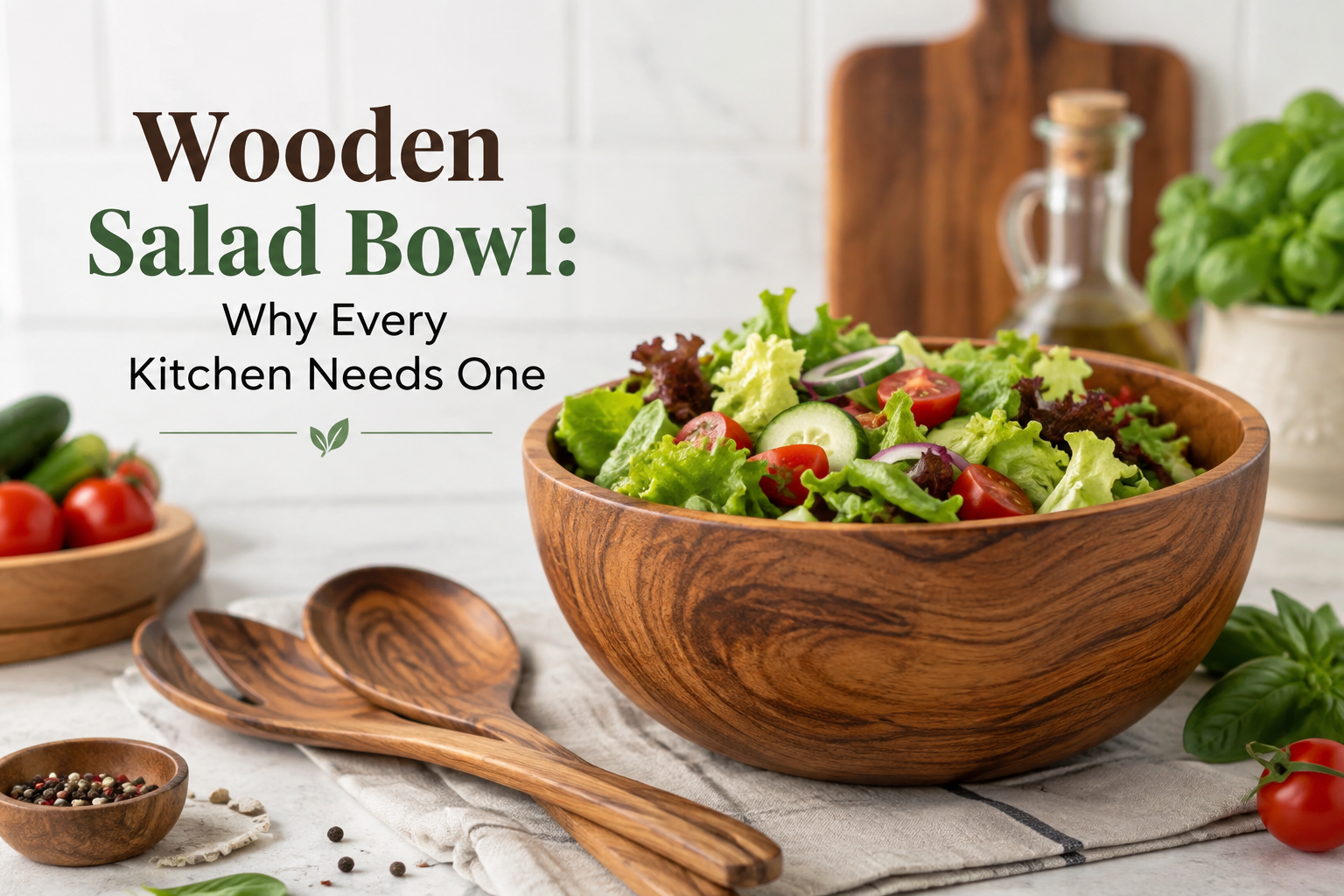
Wooden Salad Bowl: Why Every Kitchen Needs One
A wooden salad bowl is more than just a serving dish—it is a timeless kitchen essential that combines beauty, durability, and practicality. Whether you’re preparing a healthy green salad, tossing fresh vegetables, or serving fruit at the dinner table, a wooden bowl adds a natural and elegant touch to every meal.
Unlike plastic or metal bowls, wooden salad bowls are gentle on ingredients, helping maintain the texture of delicate greens without bruising them. They also fit perfectly into modern, farmhouse, rustic, and traditional kitchen styles. With proper care, a high-quality wooden salad bowl can last for many years, making it a worthwhile investment for any home.
Why Choose a Wooden Salad Bowl?
Wooden salad bowls have been used for generations because they are both functional and attractive. Their natural grain patterns make each bowl unique, turning an everyday kitchen item into a decorative piece.
Some of the biggest reasons people prefer wooden bowls include:
- Elegant and timeless appearance
- Lightweight yet durable construction
- Safe for serving fresh foods
- Eco-friendly alternative to plastic
- Gentle on leafy vegetables
- Suitable for both casual and formal dining
A wooden salad bowl is perfect for family dinners, holiday gatherings, outdoor picnics, and everyday meals.
Benefits of Using a Wooden Salad Bowl
Natural Beauty
Every wooden bowl features unique wood grain and color variations. No two bowls are exactly alike, making each piece special.
Whether crafted from acacia, teak, maple, or olive wood, the natural finish brings warmth and sophistication to your dining table.
Durable and Long-Lasting
High-quality hardwood bowls can last for decades with proper maintenance. Unlike glass, they won’t shatter if accidentally dropped.
Their sturdy construction makes them ideal for daily kitchen use.
Gentle on Fresh Ingredients
Leafy greens such as lettuce, spinach, and arugula can become damaged in metal bowls. Wooden bowls provide a smooth surface that helps preserve the freshness and appearance of salads.
This makes tossing ingredients easier while maintaining their texture.
Eco-Friendly Choice
Wood is a renewable resource when responsibly sourced. Choosing a wooden salad bowl helps reduce dependence on plastic kitchenware and supports sustainable living.
Many wooden bowls are handcrafted using environmentally friendly materials.
Comfortable to Handle
Wood remains comfortable to hold even when filled with cold ingredients. Unlike metal bowls, it doesn’t become icy or slippery.
Its lightweight design also makes serving food easier.
Common Types of Wood Used
Different types of wood offer varying appearances and durability.
Acacia Wood
Acacia is one of the most popular choices because it is:
- Highly durable
- Naturally water-resistant
- Rich in color
- Scratch resistant
Its beautiful dark grain makes it suitable for decorative serving.
Teak Wood
Teak contains natural oils that help resist moisture.
Advantages include:
- Exceptional durability
- Attractive golden-brown color
- Excellent resistance to cracking
- Long lifespan
Olive Wood
Olive wood is famous for its dramatic grain patterns.
Each bowl has a distinctive appearance, making it ideal as both kitchenware and home décor.
Maple Wood
Maple offers a lighter, cleaner appearance and works well in modern kitchens.
It is:
- Strong
- Smooth
- Easy to maintain
- Resistant to wear
How to Choose the Best Wooden Salad Bowl
Not every wooden bowl offers the same quality. Consider these factors before purchasing.
Bowl Size
Choose the size based on your household.
- Small (8–10 inches): Ideal for one or two people
- Medium (10–12 inches): Great for everyday family meals
- Large (12–16 inches): Perfect for parties and gatherings
Wood Quality
Look for hardwood instead of softwood.
Hardwoods like acacia, teak, and maple provide better durability and resist cracking over time.
Food-Safe Finish
A quality bowl should have a food-safe oil or wax finish.
Avoid bowls coated with harmful chemicals or thick synthetic finishes.
Craftsmanship
Inspect the bowl for:
- Smooth edges
- Even surface
- No visible cracks
- Strong construction
Handcrafted bowls often provide superior quality.
Best Uses for a Wooden Salad Bowl
A wooden salad bowl is surprisingly versatile.
You can use it for:
- Green salads
- Pasta salads
- Fruit salads
- Bread serving
- Snack presentation
- Popcorn
- Decorative centerpieces
- Fresh vegetables
- Dining table decoration
Many homeowners even display wooden bowls as permanent kitchen décor.
How to Care for a Wooden Salad Bowl
Proper maintenance keeps wooden bowls beautiful for years.
Wash by Hand
Always wash with:
- Warm water
- Mild dish soap
- Soft sponge
Avoid soaking the bowl in water.
Dry Immediately
After washing, dry thoroughly using a clean towel.
Never leave wooden bowls wet for long periods.
Oil Regularly
Apply food-grade mineral oil every few weeks to prevent drying and cracking.
This also enhances the wood’s natural shine.
Avoid Dishwashers
High heat and excessive moisture can cause:
- Warping
- Splitting
- Cracking
- Finish damage
Hand washing is always recommended.
Store Properly
Keep your bowl in a cool, dry place away from direct sunlight and extreme temperatures.
Wooden Salad Bowl vs Plastic Bowl
| Feature | Wooden Bowl | Plastic Bowl |
|---|---|---|
| Appearance | Natural and elegant | Basic and simple |
| Durability | Long-lasting | Can crack over time |
| Eco-Friendly | Yes | Usually no |
| Food Presentation | Excellent | Average |
| Heat Resistance | Good | Moderate |
| Sustainability | Renewable | Petroleum-based |
Wooden bowls clearly provide a more premium and environmentally friendly option.
Wooden Salad Bowl vs Glass Bowl
Glass bowls are attractive but fragile.
Wooden bowls offer several advantages:
- Less likely to break
- Easier to carry
- Better insulation
- Rustic appearance
- Lightweight
- Comfortable handling
While glass works well for certain occasions, wooden bowls are often more practical for everyday use.
Decorating with Wooden Salad Bowls
A wooden salad bowl isn’t limited to serving food.
Creative decorating ideas include:
Kitchen Counter Display
Fill it with:
- Fresh lemons
- Apples
- Oranges
- Seasonal fruits
This creates a welcoming kitchen atmosphere.
Dining Table Centerpiece
Add decorative items like:
- Pinecones
- Decorative balls
- Dried flowers
- Candles (placed safely in holders)
It becomes an eye-catching centerpiece.
Coffee Table Accent
Wooden bowls also work beautifully as decorative containers for magazines, remotes, or seasonal décor.
Are Wooden Salad Bowls Safe?
Yes, wooden salad bowls are completely safe when made from food-safe hardwood and properly maintained.
Wood naturally resists bacteria better than many people assume because moisture doesn’t remain on the surface as easily as it does on some synthetic materials. Keeping the bowl clean, dry, and regularly oiled helps maintain its condition and ensures safe food use.
Always purchase bowls from reputable manufacturers that specify food-safe finishes.
Tips for Getting the Most from Your Wooden Salad Bowl
To maximize the lifespan of your bowl:
- Wash immediately after use.
- Never soak it in water.
- Oil it regularly with food-grade mineral oil.
- Avoid harsh cleaners and steel wool.
- Store it away from excessive heat.
- Use wooden utensils to prevent scratches.
- Do not microwave or place in the dishwasher.
Following these simple steps will keep your bowl looking beautiful for many years.
Conclusion
A wooden salad bowl is a practical, durable, and stylish addition to any kitchen. Its natural beauty, eco-friendly appeal, and long lifespan make it far more than just a serving bowl. Whether you’re tossing fresh salads, serving fruit, or enhancing your table décor, a quality wooden bowl offers both functionality and timeless elegance.