


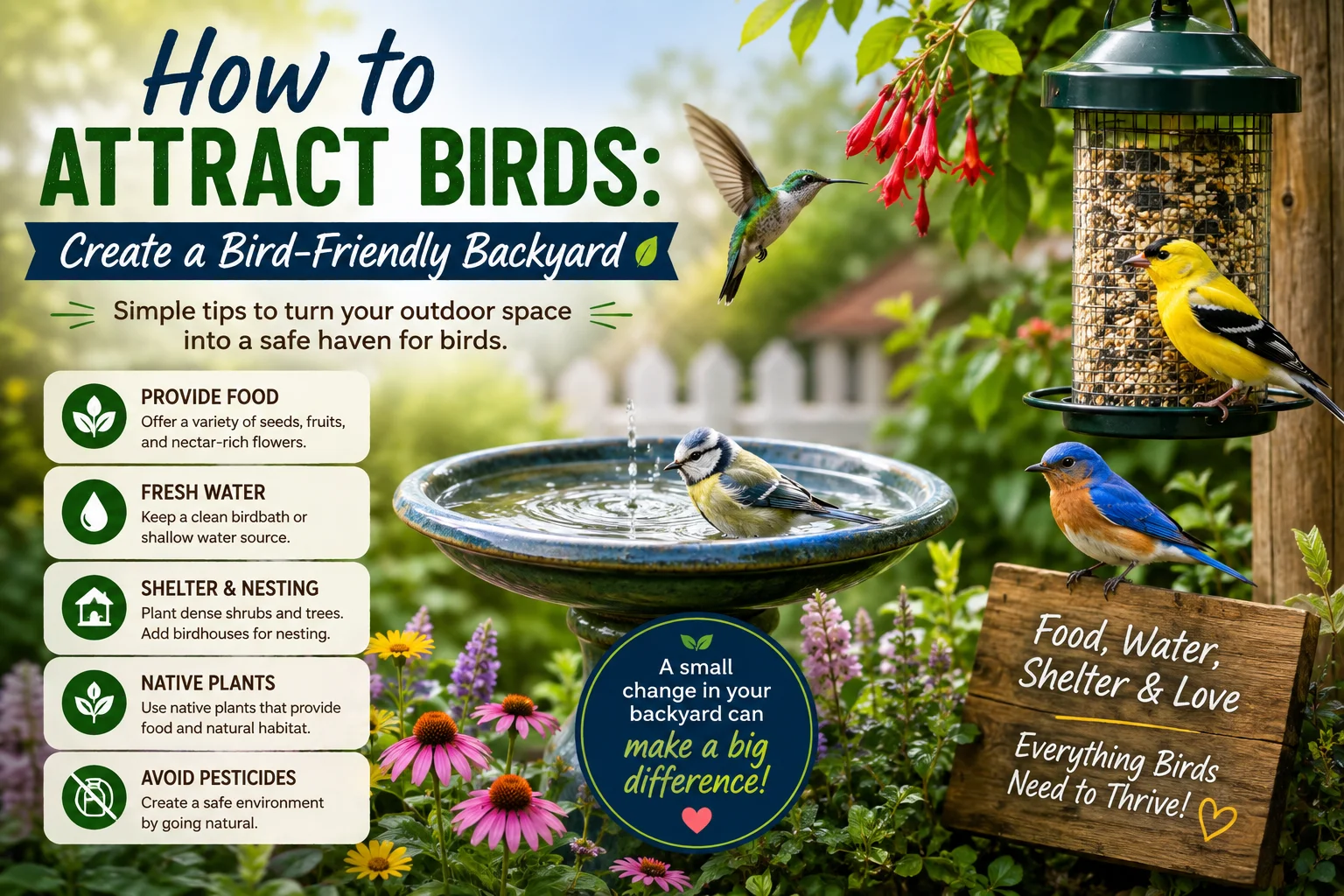
How to Attract Birds: Create a Bird-Friendly Backyard
Learning how to attract birds is one of the easiest ways to bring life, color, and natural beauty into your outdoor space. Whether you have a large garden, a small backyard, or even a balcony, creating a bird-friendly environment encourages local bird species to visit throughout the year. Birds also provide valuable benefits, including natural pest control, pollination, and seed dispersal, making your garden healthier and more vibrant.
The good news is that you do not need expensive equipment or a large budget. By providing food, fresh water, shelter, and safe nesting areas, you can transform your yard into a welcoming habitat for birds. This guide explains practical and proven ways to attract birds while creating a backyard they will want to return to again and again.
Why Attract Birds to Your Backyard?
Inviting birds into your outdoor space offers many advantages beyond their beautiful songs and colorful feathers.
Some of the biggest benefits include:
- Natural control of insects and garden pests
- Pollination of flowers and plants
- Better seed distribution for healthy landscapes
- Relaxation through birdwatching
- Increased biodiversity in your local environment
Birds help maintain a balanced ecosystem, making your garden healthier without relying heavily on chemicals.
Provide the Right Food
Food is one of the main reasons birds visit a yard. Offering a variety of nutritious foods attracts different species.
Use Bird Feeders
Choose feeders designed for different feeding habits.
Popular feeder types include:
- Tube feeders for small songbirds
- Platform feeders for larger birds
- Hopper feeders for mixed seeds
- Suet feeders for woodpeckers and nuthatches
Cleaning feeders every one to two weeks helps prevent disease.
Offer Different Seeds
Different birds prefer different foods.
Some excellent options include:
- Black oil sunflower seeds
- Nyjer (thistle) seeds
- Safflower seeds
- Cracked corn
- Millet
- Mixed birdseed
Avoid low-quality seed mixes that contain excessive filler grains birds rarely eat.
Add Natural Food Sources
Native plants provide food throughout the year.
Plant:
- Berry-producing shrubs
- Sunflowers
- Coneflowers
- Black-eyed Susans
- Native grasses
- Fruit-bearing trees
These natural food sources support birds while improving your landscape.
Keep Fresh Water Available
Birds need water for drinking and bathing every day.
Install a Bird Bath
A shallow bird bath is enough for many species.
For best results:
- Keep water 1–2 inches deep
- Change water every few days
- Clean regularly to prevent algae
- Place it near shrubs for quick escape from predators
Moving water, such as a small fountain or dripper, attracts even more birds because they can hear the sound from a distance.
Winter Water Sources
During cold weather, heated bird baths prevent freezing and provide birds with a reliable water source when natural supplies are limited.
Plant Native Trees and Shrubs
Native vegetation is one of the most effective ways to attract birds.
Best Plants for Birds
Choose plants that provide:
- Berries
- Seeds
- Nectar
- Insects
- Shelter
Examples include:
- Oak trees
- Dogwood
- Serviceberry
- Elderberry
- Holly
- Juniper
Native plants also require less maintenance because they are adapted to your local climate.
Create Safe Shelter
Birds need places to rest, hide, and escape predators.
Layer Your Landscaping
A bird-friendly yard includes multiple plant heights:
- Tall trees
- Medium shrubs
- Dense bushes
- Ground cover
- Native grasses
This layered habitat provides protection for many bird species.
Leave Some Natural Areas
Avoid making every part of your yard perfectly tidy.
Leaving:
- Brush piles
- Fallen logs
- Leaf litter
- Dense shrubs
creates shelter for birds and the insects they feed on.
Install Birdhouses
Many birds search for safe nesting cavities during breeding season.
Choose the Right Birdhouse
Different birds require different entrance hole sizes and house dimensions.
Good birdhouse practices include:
- Mounting houses securely
- Keeping them away from busy areas
- Cleaning them after nesting season
- Protecting them from predators
Proper placement greatly improves nesting success.
Avoid Harmful Chemicals
Chemical pesticides reduce the insects many birds depend on for food.
Instead:
- Use natural pest control methods
- Encourage beneficial insects
- Compost garden waste
- Practice organic gardening when possible
Healthy gardens support healthy bird populations.
Grow Flowers That Attract Birds
Flowering plants provide nectar and attract insects that birds eat.
Excellent bird-friendly flowers include:
- Bee balm
- Salvia
- Columbine
- Cardinal flower
- Trumpet vine
- Zinnias
Hummingbirds especially appreciate brightly colored tubular flowers.
Keep Cats Away from Birds
Outdoor cats are among the biggest threats to backyard birds.
Protect birds by:
- Keeping cats indoors
- Supervising outdoor pets
- Using cat-proof fencing
- Placing feeders away from hiding places
Simple precautions can significantly reduce bird injuries.
Reduce Window Collisions
Glass windows often reflect trees and sky, causing birds to collide with them.
Ways to reduce collisions include:
Apply Window Decals
Bird-safe decals help birds recognize glass.
Move Feeders Closer
Position feeders within three feet of windows or more than thirty feet away to reduce dangerous flight speeds.
Close Curtains
Curtains and blinds reduce reflections that confuse birds.
Offer Seasonal Food
Birds have changing nutritional needs throughout the year.
Spring
Provide protein-rich foods like:
- Mealworms
- Suet
- Sunflower seeds
Summer
Offer:
- Fresh water
- Fruits
- Nectar
- Seeds
Fall
Birds prepare for migration by eating:
- High-fat seeds
- Berries
- Nuts
Winter
Energy-rich foods are especially valuable.
Include:
- Suet
- Peanut pieces
- Black oil sunflower seeds
- Cracked corn
Seasonal feeding supports birds during every stage of the year.
Create a Quiet Environment
Birds prefer peaceful areas with minimal disturbance.
Reduce unnecessary noise by:
- Limiting loud outdoor equipment
- Providing quiet corners
- Avoiding constant human traffic around nesting sites
A calm environment encourages birds to stay longer.
Keep Feeders Clean
Dirty feeders spread bacteria and mold.
Maintain feeders by:
- Washing with warm soapy water
- Disinfecting occasionally using a diluted bleach solution
- Drying completely before refilling
- Removing spoiled seed immediately
Regular maintenance keeps birds healthy.
Common Mistakes to Avoid
Many well-meaning gardeners accidentally discourage birds.
Avoid these common mistakes:
- Letting feeders become empty for long periods
- Using moldy or poor-quality seed
- Allowing bird baths to become dirty
- Overusing pesticides
- Removing all natural brush and vegetation
- Placing feeders too close to predators
Making small improvements often results in more frequent bird visits.
How Long Does It Take to Attract Birds?
Every yard is different, but birds often discover new feeders within a few days to several weeks. Adding native plants, clean water, and safe shelter creates a complete habitat that encourages birds to return throughout the year.
Consistency is important. Birds quickly learn where reliable food and water are available and often make those locations part of their regular feeding routes.
Conclusion
Knowing how to attract birds is about creating a safe, welcoming habitat that meets their everyday needs. By offering nutritious food, clean water, native plants, shelter, and nesting spaces, you can turn almost any backyard into a thriving bird sanctuary. Avoid harmful chemicals, maintain clean feeders, and provide year-round resources to keep birds healthy and coming back season after season. With a little patience and thoughtful planning, your backyard can become a lively haven filled with beautiful birds and the many benefits they bring to your garden.