



How to Make Tea: The Perfect Cup Every Time
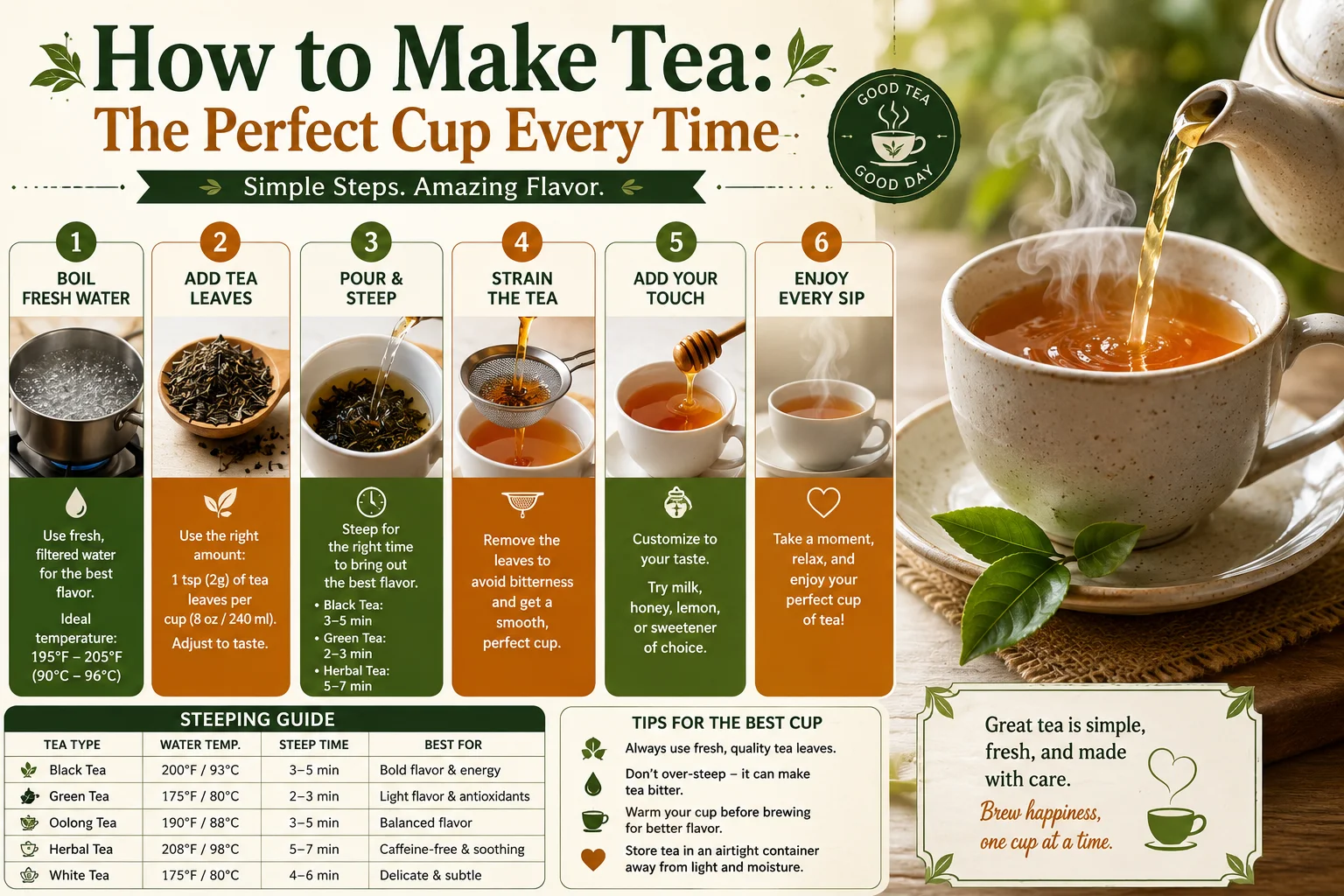
Knowing how to make tea is a simple skill that can transform your daily routine. Whether you enjoy black tea in the morning, green tea in the afternoon, or a soothing herbal blend before bed, the perfect cup comes down to using the right ingredients, water temperature, and steeping time. Small adjustments can make a big difference in flavor, aroma, and overall enjoyment.
Why Making Tea Correctly Matters
A properly brewed cup of tea offers:
- Rich, balanced flavor
- Better aroma
- Maximum health benefits
- A smoother drinking experience
- Less bitterness and a more refreshing taste
Using the wrong water temperature or steeping tea for too long can result in a bitter or weak cup.
Ingredients You’ll Need
Before you begin, gather the following:
Basic Ingredients
- Fresh water
- Tea leaves or bags
- A kettle
- A teapot, mug, or infuser
Optional Additions
- Honey
- Sugar
- Lemon slices
- Fresh mint
- Milk
- Cinnamon sticks
- Ginger
Using filtered water often improves the taste because it contains fewer minerals and impurities.
Choosing the Right Type of Tea
Different teas require different brewing methods.
Black Tea
Black tea has a bold flavor and pairs well with milk and sugar.
Examples include:
- English Breakfast
- Earl Grey
- Assam
- Darjeeling
Green Tea
Green tea has a lighter, fresher taste and should be brewed with cooler water to prevent bitterness.
Popular varieties include:
- Sencha
- Matcha
- Jasmine Green Tea
White Tea
White tea is delicate and naturally sweet. It requires gentle brewing with lower water temperatures.
Oolong Tea
Oolong tea falls between green and black tea in oxidation, offering floral and fruity flavors.
Herbal Tea
Herbal teas contain herbs, flowers, fruits, or spices instead of traditional tea leaves.
Popular options include:
- Chamomile
- Peppermint
- Hibiscus
- Rooibos
How to Make Tea Step by Step
Step 1: Use Fresh Water
Always start with cold, fresh water.
Avoid reboiling old water because it loses oxygen, which affects the flavor of your tea.
Step 2: Heat the Water
Different teas need different water temperatures.
| Tea Type | Water Temperature |
|---|---|
| Black | 200–212°F (93–100°C) |
| Green | 170–180°F (77–82°C) |
| White | 160–175°F (71–79°C) |
| Oolong | 185–205°F (85–96°C) |
| Herbal Tea | 212°F (100°C) |
Using the correct temperature prevents bitterness and preserves delicate flavors.
Step 3: Measure the Amount
A general guideline is:
- 1 teaspoon of loose leaves per cup
- 1 bag per cup
For a stronger flavor, use a little more instead of increasing the steeping time.
Step 4: Pour Hot Water
Pour the hot water directly over the loose leaves or bag, making sure they are fully submerged.
This helps extract the flavor evenly for a balanced and enjoyable cup.
Step 5: Steep for the Right Amount of Time
Steeping time is one of the most important factors.
| Tea Type | Steeping Time |
|---|---|
| Black | 3–5 minutes |
| Green | 2–3 minutes |
| White | 2–5 minutes |
| Oolong | 3–5 minutes |
| Herbal | 5–7 minutes |
Remove the bag or strain the leaves once steeping is complete.
Step 6: Add Extras if Desired
Customize your tea by adding:
- Honey for natural sweetness
- Lemon for brightness
- Milk for creamy black tea
- Ginger for warmth
- Mint for freshness
Taste the tea before adding anything—you may enjoy its natural flavor.
Tips for Brewing the Perfect Cup
Use Quality
Fresh loose-leaf tea generally provides better flavor than older bags.
Warm Your Cup
Pour hot water into your mug before brewing, then empty it.
This helps maintain the tea’s temperature longer.
Cover While Steeping
Keeping the cup covered traps heat and preserves aromatic oils.
Don’t Overbrew
Long steeping times often make tea bitter instead of stronger.
Store Properly
Keep tea in:
- An airtight container
- A cool place
- Away from moisture
- Away from direct sunlight
Proper storage keeps fresh for months.
Common Mistakes to Avoid
Many people accidentally ruin their tea by making simple mistakes.
Using Boiling Water for Green Tea
Boiling water burns delicate green leaves and creates bitterness.
Steeping Too Long
More time doesn’t mean better flavor.
Follow the recommended steeping times.
Using Poor-Quality Water
Tap water with a strong chlorine taste can affect your tea.
Filtered water usually produces better results.
Reusing Old Tea Bags
The second brew is often weak unless you’re using high-quality loose-leaf designed for multiple infusions.
Different Ways to Enjoy It
This popular beverage can be enjoyed in several delicious ways.
Hot
Perfect for relaxing mornings or cool evenings.
Iced
Brew it slightly stronger than usual, then chill and serve over ice.
Add lemon slices or fresh fruit for extra flavor.
With Milk
Mix a strong black brew with milk for a rich, creamy drink enjoyed around the world.
Herbal Wellness
Chamomile promotes relaxation, while peppermint offers a refreshing finish after meals.
Health Benefits
Tea contains antioxidants and natural plant compounds that may support overall wellness.
Depending on the variety,
- Support heart health
- Improve focus
- Promote relaxation
- Aid digestion
- Provide antioxidants
- Encourage hydration
Keep in mind that many teas contain caffeine, while most herbal teas are naturally caffeine-free.
How to Improve the Flavor
If your drink doesn’t taste quite right, try these simple tips:
- Use fresh loose leaves.
- Adjust the steeping time.
- Measure the correct amount of leaves.
- Use filtered water.
- Add honey, lemon, or spices for extra flavor.
- Choose high-quality loose leaves for a richer taste.
Small changes can make every cup more flavorful and enjoyable.
Best Tea Pairings
Pairing with food enhances both flavors.
Black Tea
- Toast
- Biscuits
- Scones
- Breakfast sandwiches
Green
- Sushi
- Salads
- Light seafood
- Rice dishes
Herbal
- Fruit
- Cookies
- Dark chocolate
- Yogurt
Oolong
- Roasted nuts
- Chicken dishes
- Soft cheeses
FAQs
How can I brew using loose leaves instead of a bag?
Place loose leaves in an infuser or teapot, pour hot water over them, steep for the recommended time, and strain before serving.
Can I reuse loose leaves?
Yes. High-quality loose leaves can often be steeped two or three times, though each infusion may produce a lighter flavor.
Why does my drink taste bitter?
Bitterness is usually caused by water that is too hot or by steeping for longer than recommended.
Are loose leaves better than bags?
Loose leaves generally provide a richer flavor, better aroma, and higher quality because they contain larger, less broken leaves.
Should I add milk before or after brewing?
For the best flavor and strength, brew first and then add milk if desired.
Conclusion
Perfect results come from using quality ingredients, the correct water temperature, and the right steeping time. Whether you enjoy black, green, white, oolong, or herbal varieties, following a few simple techniques will help you create a flavorful, aromatic, and satisfying cup every time. With a little practice, you’ll consistently enjoy a better brewing experience.