


What Is a Light Roast Coffee? Flavor, Benefits & Brewing Tips
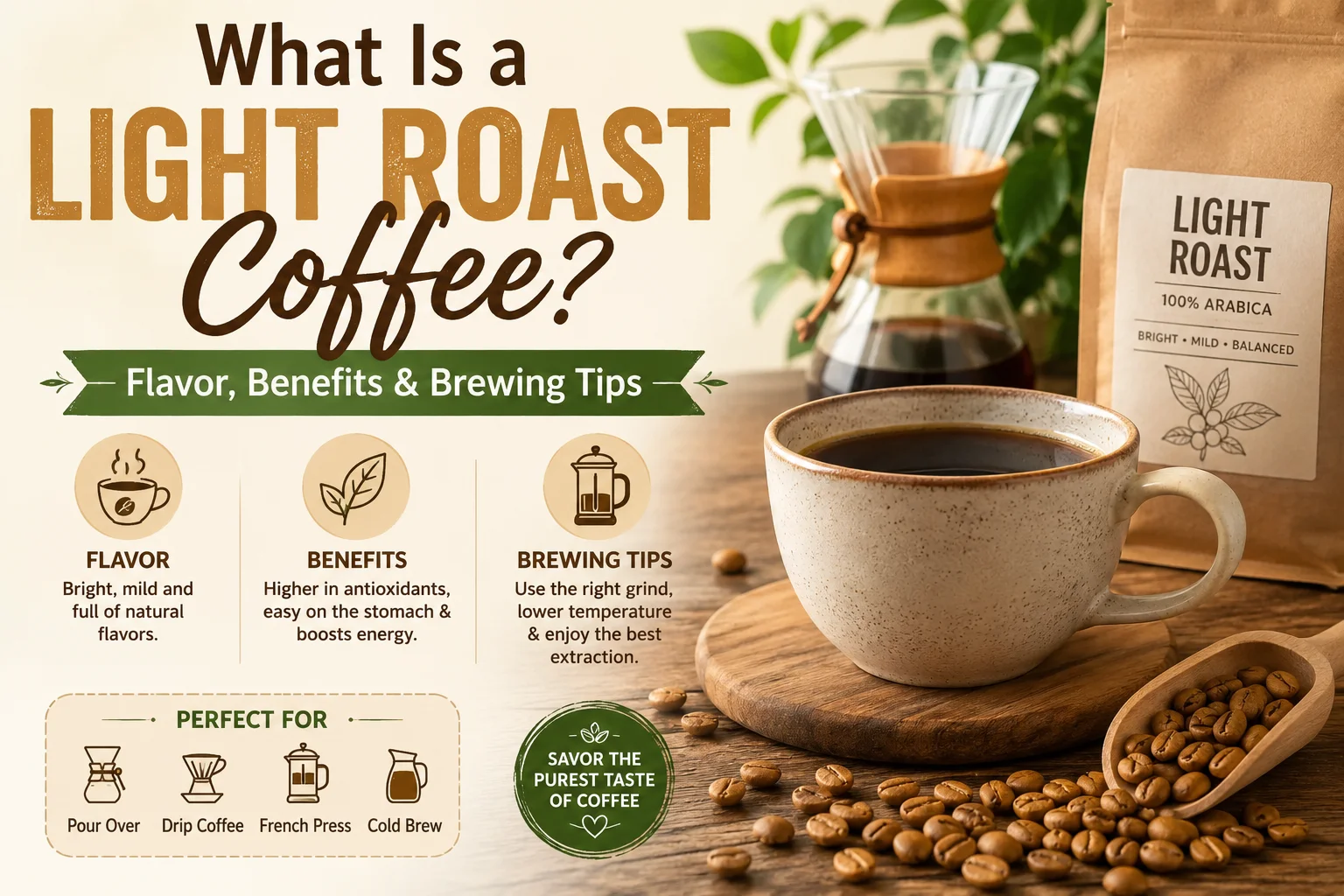
Coffee lovers often have different preferences when it comes to roast levels, but light roast coffee has gained remarkable popularity in recent years. Known for its bright flavors, higher acidity, and unique taste profiles, light roast coffee allows the natural characteristics of the coffee bean to shine. Whether you’re new to specialty coffee or looking to improve your brewing skills, understanding light roast coffee can help you enjoy every cup to its fullest.
What Is Light Roast Coffee?
Light roast coffee refers to coffee beans that are roasted for a shorter period at lower temperatures than medium or dark roasts. The roasting process typically ends shortly after the “first crack,” preserving more of the bean’s original flavors.
Unlike dark roast coffee, which develops bold, smoky, and caramelized flavors during extended roasting, light roast coffee maintains much of its natural sweetness, fruitiness, and floral notes. The beans are usually light brown in color and have a dry surface because the oils remain inside the bean rather than rising to the exterior.
How Is Light Roast Coffee Made?
The roasting process plays the biggest role in determining the coffee’s flavor.
Selecting High-Quality Green Beans
Specialty-grade coffee beans are commonly chosen for light roasting because their natural flavors can be fully appreciated.
Shorter Roasting Time
Light roast beans are roasted until shortly after the first crack, usually between 356°F and 401°F (180°C–205°C). This shorter roast preserves the bean’s original characteristics.
Cooling the Beans
Once the desired roast level is reached, the beans are cooled quickly to stop further roasting and maintain their delicate flavors.
Flavor Profile of Light Roast Coffee
One of the biggest reasons people enjoy light roast coffee is its complex and vibrant flavor profile.
Fruity Notes
Many light roasts feature flavors such as berries, citrus, apple, peach, or tropical fruits.
Floral Aromas
Certain beans, especially those from Ethiopia, may offer jasmine, lavender, or tea-like aromas.
Bright Acidity
Light roast coffee is often described as lively or crisp due to its pleasant acidity, which enhances flavor rather than making the coffee sour.
Natural Sweetness
You’ll often notice hints of honey, brown sugar, caramel, or chocolate without the heavy roasted taste found in darker coffees.
Light Roast vs Medium Roast vs Dark Roast
Understanding the differences helps you choose the roast that best matches your taste.
| Feature | Light Roast | Medium Roast | Dark Roast |
|---|---|---|---|
| Color | Light brown | Medium brown | Dark brown |
| Surface | Dry | Slightly oily | Oily |
| Flavor | Fruity, floral, bright | Balanced, sweet | Bold, smoky |
| Acidity | High | Moderate | Low |
| Origin Flavor | Very noticeable | Balanced | Mostly hidden |
| Roast Flavor | Mild | Moderate | Strong |
Light roast emphasizes the bean itself, while darker roasts highlight the roasting process.
Does Light Roast Have More Caffeine?
This is one of the most common coffee myths.
By volume, light roast coffee often contains slightly more caffeine because the beans are denser after shorter roasting.
However, if measured by weight, the caffeine difference between light and dark roast is minimal. In practical terms, both roast levels provide similar caffeine content for most brewing methods.
Health Benefits of Light Roast Coffee
Light roast coffee offers several potential health advantages thanks to its higher concentration of naturally occurring compounds.
Higher Antioxidant Content
The shorter roasting process preserves more antioxidants, which may help protect cells from oxidative stress.
Rich in Chlorogenic Acid
Light roast coffee contains more chlorogenic acid, a natural compound associated with supporting healthy metabolism and reducing inflammation.
Lower Formation of Certain Compounds
Longer roasting creates higher levels of some compounds that may reduce beneficial antioxidants. Light roasting helps preserve these nutrients.
Natural Energy Boost
Like all coffee, light roast provides caffeine that can improve focus, alertness, and concentration when consumed in moderation.
Best Brewing Methods for Light Roast Coffee
Different brewing techniques bring out different flavors in light roast beans.
Pour-Over
Pour-over brewing highlights the bright acidity and complex flavor notes. Methods such as V60 or Chemex are excellent choices.
AeroPress
The AeroPress creates a clean cup while emphasizing sweetness and fruit flavors.
French Press
Although commonly used for darker roasts, a French press can produce a fuller-bodied light roast with proper grind size and steeping time.
Drip Coffee Maker
Automatic drip brewers offer convenience and consistent results, especially when using freshly ground beans.
Espresso
Modern specialty cafés often use light roast espresso to create fruity, vibrant shots with unique flavor complexity.
Brewing Tips for the Best Cup
Use Fresh Beans
Purchase freshly roasted coffee and consume it within a few weeks for maximum flavor.
Grind Just Before Brewing
Grinding immediately before brewing preserves aroma and freshness.
Use Filtered Water
Since coffee is mostly water, clean filtered water significantly improves taste.
Slightly Hotter Brewing Temperature
Light roast beans benefit from water temperatures between 200°F and 205°F (93°C–96°C), helping extract their delicate flavors.
Adjust Your Grind Size
- Pour-over: Medium-fine
- French Press: Coarse
- Espresso: Fine
- Drip Coffee: Medium
Finding the right grind improves extraction and overall flavor.
Best Coffee Bean Origins for Light Roast
Certain coffee-growing regions produce beans that excel as light roasts.
Ethiopia
Known for floral aromas, blueberry, jasmine, and citrus flavors.
Kenya
Produces bright acidity with blackcurrant, berry, and wine-like characteristics.
Colombia
Offers balanced sweetness with caramel, citrus, and red fruit notes.
Costa Rica
Known for clean, crisp flavors featuring honey, apple, and citrus.
Guatemala
Produces chocolate, stone fruit, and floral characteristics with balanced acidity.
Common Myths About Light Roast Coffee
Myth 1: Light Roast Is Weak
Not true. The flavor may be lighter, but the coffee can be incredibly complex and sometimes even stronger in perceived brightness.
Myth 2: It Has Much More Caffeine
The caffeine difference is relatively small and usually isn’t noticeable in everyday brewing.
Myth 3: It’s Sour
Properly brewed light roast should taste bright and vibrant—not sour. Sourness usually results from under-extraction.
Myth 4: It’s Only for Coffee Experts
Anyone can enjoy light roast coffee. It’s simply a different flavor experience that highlights the coffee’s origin.
How to Choose a Good Light Roast Coffee
When shopping for light roast beans, look for:
- Fresh roast dates instead of expiration dates.
- Single-origin coffees for unique regional flavors.
- Specialty-grade beans with quality certifications.
- Whole beans rather than pre-ground coffee.
- Flavor notes listed on the packaging.
Buying from reputable local or specialty roasters often provides the freshest experience.
Who Should Try Light Roast Coffee?
Light roast coffee is ideal for:
- People who enjoy fruity or floral flavors.
- Coffee enthusiasts exploring specialty coffee.
- Those interested in tasting the bean’s natural origin.
- Home brewers using pour-over or AeroPress methods.
- Anyone looking for a bright, refreshing coffee experience.
If you prefer smoky, rich, and chocolate-heavy flavors, a medium or dark roast may better suit your taste.
Final Thoughts
Light coffee offers a refreshing alternative to traditional darker roasts by showcasing the natural flavors of high-quality coffee beans. Its bright acidity, fruity sweetness, floral aromas, and preserved antioxidants make it a favorite among specialty coffee enthusiasts. Whether brewed with a pour-over, AeroPress, French press, or espresso machine, roast coffee rewards careful brewing with a vibrant and flavorful cup.