
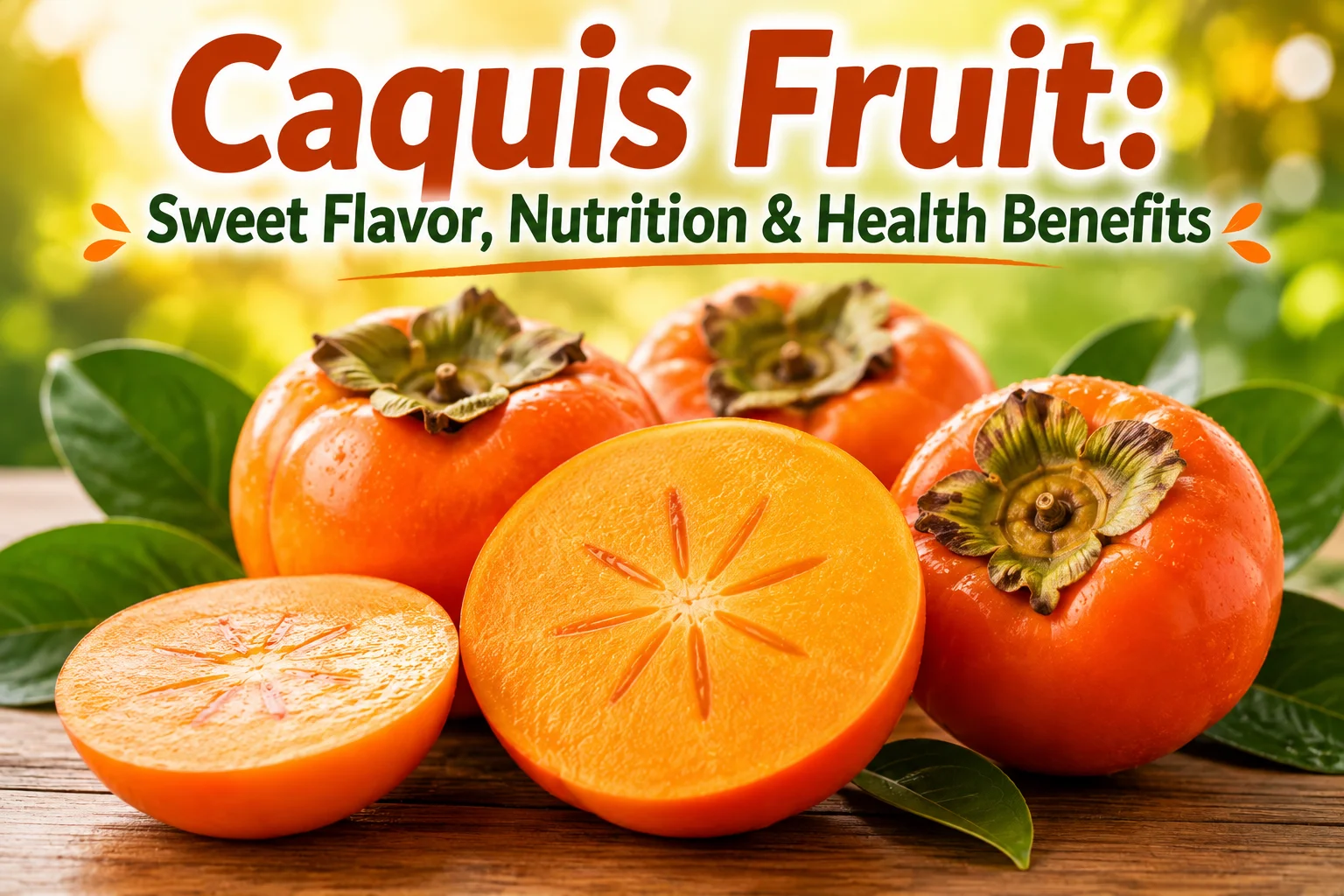
Caquis Fruit—commonly known as the persimmon—is a vibrant, honey-sweet jewel of late autumn and winter. Native to East Asia, where it has been cultivated for over a millennium, this tomato-shaped fruit has captivated food lovers and health enthusiasts around the world. Beyond its rich, silky texture and distinctively sweet flavor profile, the caquis fruit is a powerhouse of essential vitamins, antioxidants, and dietary fiber.
What Is Caquis Fruit?
The caquis fruit grows on trees belonging to the genus Diospyros, which translates in Greek to “fruit of the gods”—a fitting name for a produce so naturally sweet. While there are hundreds of cultivars, caquis are broadly categorized into two distinct types based on their astringency before ripening.
Astringent Caquis
-
Hachiya: The most famous astringent variety, recognizable by its heart-like shape. Raw, unripened Hachiya persimmons contain high levels of soluble tannins, which create a puckering, dry mouthfeel.
-
Ripening Process: To enjoy astringent caquis, they must be allowed to ripen fully until they feel like soft jelly water balloons. When completely soft, the tannins break down, exposing a custard-like, deeply sweet flesh.
Non-Astringent Caquis
-
Fuyu: Shaped like a small, flattened orange tomato, Fuyu is the most common non-astringent variety.
-
Crisp Consumption: Unlike astringent types, Fuyu caquis can be eaten while firm and crisp, much like an apple. Their flavor is mild, sweet, and faintly spice-tinged, making them versatile for snacking, salads, and baking.
Nutritional Profile of Caquis Fruit
Despite their rich taste, caquis are surprisingly low in calories while offering an exceptional nutrient density. A single medium-sized caquis fruit (approx. 168 grams) provides a balanced blend of vital macronutrients, vitamins, and trace minerals.
| Nutrient | Amount per Medium Caquis (168g) | Daily Value (DV) % |
| Calories | 118 kcal | 6% |
| Carbohydrates | 31 g | 11% |
| Dietary Fiber | 6 g | 21% |
| Protein | 1 g | 2% |
| Fat | 0.3 g | 0% |
| Vitamin A | 1,480 IU | 55% |
| Vitamin C | 12.6 mg | 21% |
| Vitamin E | 1.2 mg | 8% |
| Vitamin B6 (Pyridoxine) | 0.2 mg | 14% |
| Manganese | 0.6 mg | 26% |
| Potassium | 270 mg | 6% |
| Copper | 0.2 mg | 18% |
Health Benefits of Caquis Fruit
Incorporating caquis into your daily diet yields numerous benefits, from supporting cardiovascular health to strengthening immunity and digestive efficiency.
Loaded with Powerful Antioxidants
Caquis are packed with bioactive plant compounds that fight oxidative stress caused by free radicals:
-
Carotenoids: High levels of beta-carotene, lutein, and lycopene give the fruit its deep orange pigment and protect cellular health.
-
Flavonoids: Rich in quercetin and kaempferol, which have been linked to lower rates of chronic conditions such as heart disease and age-related cognitive decline.
Promotes Heart Health
Heart disease remains a leading health concern globally, but nutrient-rich fruits like caquis can help mitigate risk factors:
-
Fiber content: Soluble fiber helps bind excess cholesterol in the digestive system, facilitating its removal from the body.
-
Tannin-derived benefits: Studies indicate that the tannic acids found in caquis help lower systemic inflammation and regulate blood pressure levels.
Supports Digestive and Gut Wellness
A single caquis fruit fulfills over 20% of your daily recommended fiber intake. Fiber plays a double role:
-
Regularity: Adds bulk to stool, helping prevent constipation and promoting smooth digestion.
-
Prebiotic Action: Soluble fiber feeds beneficial gut bacteria (microbiome), fostering a healthy digestive environment and boosting immune defenses originating in the gut.
Enhances Vision and Eye Health
With over half of the recommended daily value of Vitamin A per serving, caquis are exceptional for maintaining eye wellness:
-
Night Vision: Vitamin A is a key component of rhodopsin, a protein essential for seeing in low-light conditions.
-
Macular Protection: Lutein and zeaxanthin act as natural sunblocks inside the retina, absorbing damaging blue light rays and cutting the risk of age-related macular degeneration (AMD).
Boosts Immune Function
A healthy immune system relies on a consistent supply of micronutrients. Caquis offer a strong dose of Vitamin C, which stimulates the production of white blood cells—the body’s primary line of defense against viral and bacterial infections.
How to Select, Store, and Eat Caquis
Getting the best flavor out of caquis fruit depends entirely on picking the right variety and eating it at the proper stage of maturity.
Selection and Storage Tips
-
Fuyu (Non-Astringent): Look for smooth, taut skin with a deep orange hue. They should yield slightly to pressure, similar to a ripe peach, but remain firm enough to slice cleanly. Store at room temperature until ripe, then refrigerate.
-
Hachiya (Astringent): Choose fruits with intact stems. If firm when purchased, leave them in a brown paper bag at room temperature alongside an apple or banana to speed up the ripening process through natural ethylene gas release. Eat only when the flesh is completely gelatinous.
Culinary Uses and Recipes
-
Fresh Snacking: Slice crisp Fuyu caquis into wedges and eat raw, skin-on or peeled.
-
Autumn Salads: Toss sliced firm caquis with arugula, goat cheese, candied walnuts, and a light balsamic vinaigrette.
-
Smoothies and Purees: Blend ripe, soft Hachiya flesh into morning smoothies or scoop it directly over Greek yogurt and oatmeal.
-
Baked Goods: Substitute mashed caquis puree for banana or pumpkin puree in bread, muffin, and cookie recipes.
FAQs
1. What is caquis fruit?
Caquis fruit is the Spanish and Portuguese name commonly used for persimmon. It is a sweet, colorful fruit with smooth skin and soft, juicy flesh when ripe. Depending on the variety, it can have a honey-like sweetness with subtle notes of apricot or cinnamon.
2. What are the health benefits of caquis fruit?
Caquis fruit provides fiber, vitamin A, vitamin C, potassium, and antioxidants. Including it in a balanced diet may support healthy digestion, immune function, and overall wellness.
3. How do you know when a caquis fruit is ripe?
Ripeness depends on the variety. Some persimmons are ready when they are slightly soft, while others should become very soft before eating. A ripe fruit generally has vibrant coloring and a pleasant, sweet aroma. Avoid fruit with extensive mold or signs of spoilage.
4. Can you eat caquis fruit with the skin?
Yes, the skin of most persimmons is edible. Wash the fruit thoroughly before eating. If you prefer a softer texture, you can peel it, particularly when the skin feels tough or the variety has a more noticeable astringency.
5. What are some easy ways to eat caquis fruit?
You can enjoy ripe caquis fruit fresh, sliced into salads, blended into smoothies, added to yogurt or oatmeal, or used in desserts. Soft varieties can also be spooned directly from the skin for a quick and naturally sweet snack.
Final Thoughts
Caquis fruit, or persimmon, is a delicious seasonal fruit that combines natural sweetness with valuable nutrients. Its fiber, vitamins, minerals, and antioxidant compounds make it a flavorful addition to a balanced diet. Whether eaten fresh, blended into a smoothie, or incorporated into a simple dessert, caquis offers plenty of delicious ways to enjoy the unique taste of persimmon.
Leave a Reply