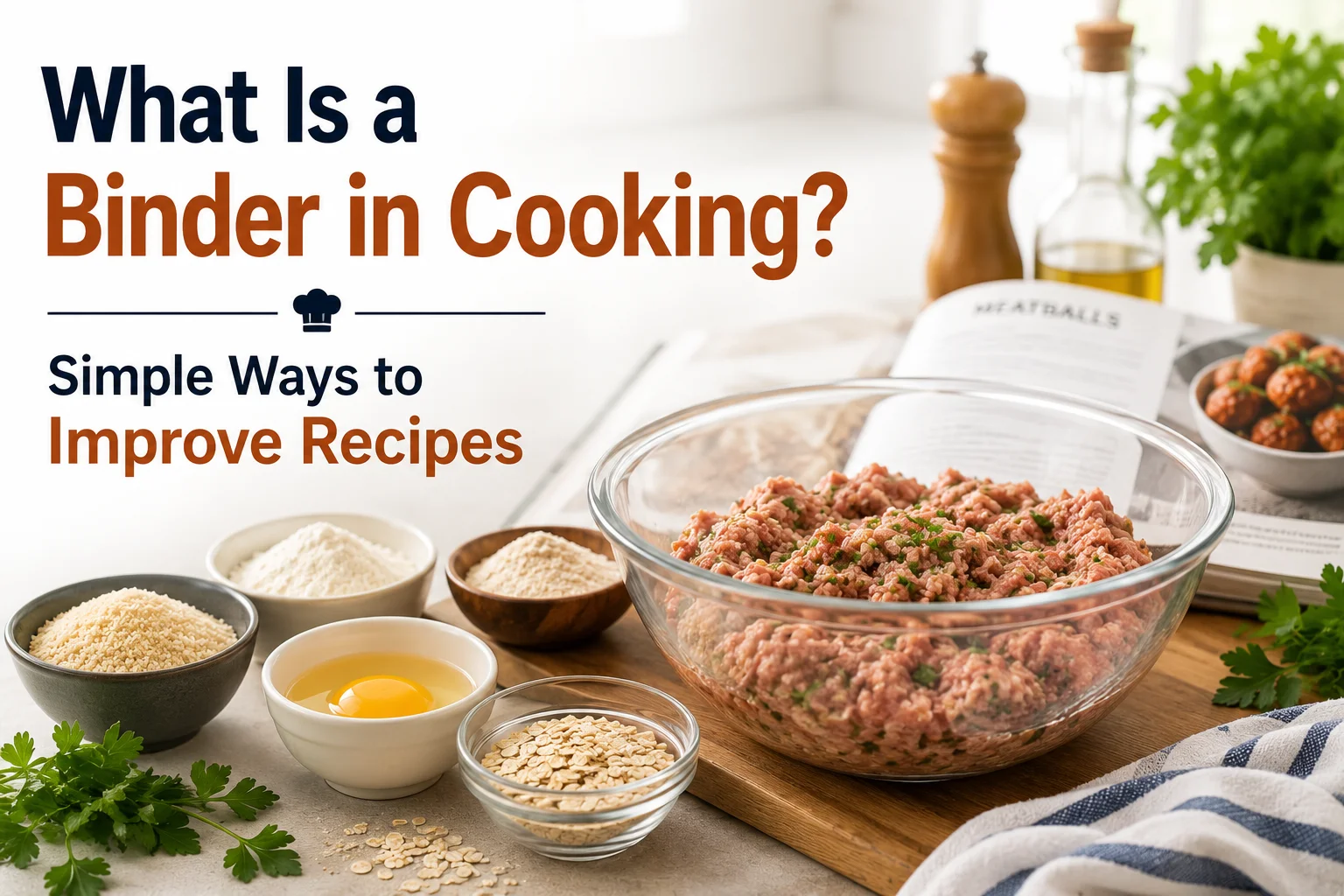
Have you ever prepared meatballs, veggie burgers, fritters, or baked goods only to discover that they fall apart while cooking? The solution may be as simple as using the right binder. A binder is an ingredient that helps different components stick together, creating a stable mixture that is easier to shape and cook. Eggs, breadcrumbs, flour, oats, cornstarch, flaxseed, chia seeds, and mashed vegetables are all examples of ingredients that can provide binding properties. Understanding how binders work can help you improve recipes, adjust textures, and solve common cooking problems without making complicated changes.
What Is a Binder in Cooking?
A binder is an ingredient used to hold other ingredients together. It creates structure in a mixture and helps prevent individual ingredients from separating during preparation or cooking.
Binders are especially important in recipes where ingredients need to be shaped before cooking. For example, ground meat naturally breaks apart, but combining it with eggs and breadcrumbs can create a mixture that holds its shape. Similarly, a vegetable patty may require oats, flour, or mashed potatoes to prevent it from crumbling.
How Binders Work
Different binders work in different ways. Some absorb excess moisture, while others become firm when heated. Eggs, for example, contain proteins that set during cooking and help create structure.
Breadcrumbs and oats work mainly by absorbing liquid from other ingredients. Starches such as cornstarch thicken mixtures when heated with moisture. Plant-based options such as flaxseed and chia seeds form gels that can help ingredients stick together.
Why Are Binders Important?
Binders are useful because they can improve more than just the structure of a dish. They can affect texture, moisture, appearance, and even the overall eating experience.
Keeping Food Together
The main purpose of a binder is to keep ingredients together. This is essential for foods such as meatballs, burgers, crab cakes, croquettes, and vegetable patties.
Without enough binding power, these foods may break apart when transferred to a pan or flipped during cooking.
Improving Texture
A good binder can help create the texture you want. Breadcrumbs can produce a tender interior, eggs can add richness and structure, and oats can provide a slightly hearty texture.
Choosing the wrong binder or using too much can have the opposite effect, making food dense, dry, or rubbery.
Controlling Moisture
Binders can also help balance moisture. Ingredients such as breadcrumbs, oats, and flour can absorb excess liquid, while eggs and mashed vegetables can add moisture to mixtures that are too dry.
Finding the right balance is important because both excessive moisture and excessive dryness can cause problems.
Common Binders Used in Cooking
Many ingredients already found in an everyday kitchen can work as binders.
Eggs
Eggs are one of the most versatile binders. They are commonly used in meatloaf, meatballs, fritters, cakes, cookies, casseroles, and breaded foods.
When eggs are heated, their proteins coagulate and create a firm structure. Eggs can also add moisture and richness to recipes.
However, adding too many eggs can make some mixtures overly soft or rubbery, so the quantity should match the recipe.
Breadcrumbs
Breadcrumbs are a popular binder for savory dishes. They absorb moisture and help create a mixture that is easy to shape.
They work particularly well in meatballs, meatloaf, crab cakes, croquettes, and vegetable patties. Dry breadcrumbs generally absorb more moisture, while fresh breadcrumbs can provide a softer texture.
Flour
Flour can bind ingredients while providing structure. Wheat flour is especially useful in baked foods because its starch and proteins contribute to the final structure.
It is commonly used in pancakes, fritters, dumplings, cookies, cakes, and sauces. Different types of flour can produce different textures, so selecting the right variety is important.
Cornstarch
Cornstarch is primarily known as a thickener, but it can also act as a binder in certain recipes. When heated with liquid, it thickens and helps create a smooth consistency.
It is commonly used in sauces, gravies, puddings, custards, and pie fillings.
Plant-Based Binders
Eggs are not the only way to bind ingredients. Several plant-based alternatives can work well in cooking and baking.
Ground Flaxseed
Ground flaxseed mixed with water forms a gel-like mixture often used as an egg alternative. It can help bind cookies, muffins, pancakes, patties, and other recipes.
Flaxseed also adds a mild nutty flavor, so it should be used in recipes where that flavor works well.
Chia Seeds
Chia seeds absorb liquid and form a thick gel. This makes them useful in energy bites, plant-based patties, and some baked foods.
Because they absorb significant amounts of liquid, they should be used carefully to prevent the final mixture from becoming too dry.
Mashed Vegetables
Mashed potatoes, sweet potatoes, pumpkin, and similar ingredients can act as natural binders.
They can add moisture, flavor, and body while helping ingredients stay together. Mashed potatoes are particularly useful in vegetable patties, croquettes, and similar dishes.
How to Choose the Right Binder
The best binder depends on the recipe and the result you want. Before choosing one, consider moisture, texture, flavor, and cooking method.
Consider Moisture Levels
If your mixture is too wet, an absorbent binder such as breadcrumbs, oats, or flour may help. If the mixture is too dry, an ingredient such as egg or mashed vegetables may provide the moisture needed for better consistency.
Think About Texture
Consider how you want the finished food to feel. If you want a soft and tender result, avoid using excessive amounts of dry binders.
For firmer foods, you may need a binder that creates stronger structure when cooked.
Match the Flavor
The binder should complement the rest of the recipe. Breadcrumbs, oats, flaxseed, and mashed vegetables can each add subtle flavors of their own.
Choose an ingredient that supports rather than overwhelms the main flavors.
Simple Ways to Improve Recipes With Binders
Using binders correctly can make recipe preparation much easier.
Add Binders Gradually
Do not add a large amount of binder at once. Start with a small quantity, mix it well, and check the consistency.
If the mixture still feels too loose, gradually add more until it becomes easy to shape.
Let the Mixture Rest
Some binders need time to absorb moisture. Allowing a mixture to rest for several minutes can improve its consistency.
This technique is particularly useful when working with breadcrumbs, oats, chia seeds, or flaxseed.
Avoid Overmixing
Overmixing can negatively affect texture. Ground meat can become dense when handled excessively, while flour-based mixtures can become tough when overworked.
Mix only until the binder is evenly distributed.
Common Binder Mistakes
Using too much binder is one of the most common mistakes. Although extra binder may make food easier to shape, it can also create a dry, dense, or heavy texture.
Another mistake is choosing a binder without considering moisture. A wet mixture may need an absorbent ingredient, while a dry mixture may require something that contributes moisture.
It is also important to consider cooking time. Some binders need heat to develop structure, while others work by absorbing liquid before cooking.
Final Thoughts
A binder in cooking is a simple but important ingredient that helps hold food together and improve its texture and consistency. From eggs and breadcrumbs to flour, oats, cornstarch, flaxseed, chia seeds, and mashed vegetables, there are many options to choose from.
The key is selecting a binder that matches the recipe. Pay attention to moisture, texture, flavor, and cooking method, and add the binder gradually rather than using too much. With a little experimentation, you can use binders to fix crumbly mixtures, improve texture, and create more reliable recipes at home.
Leave a Reply