
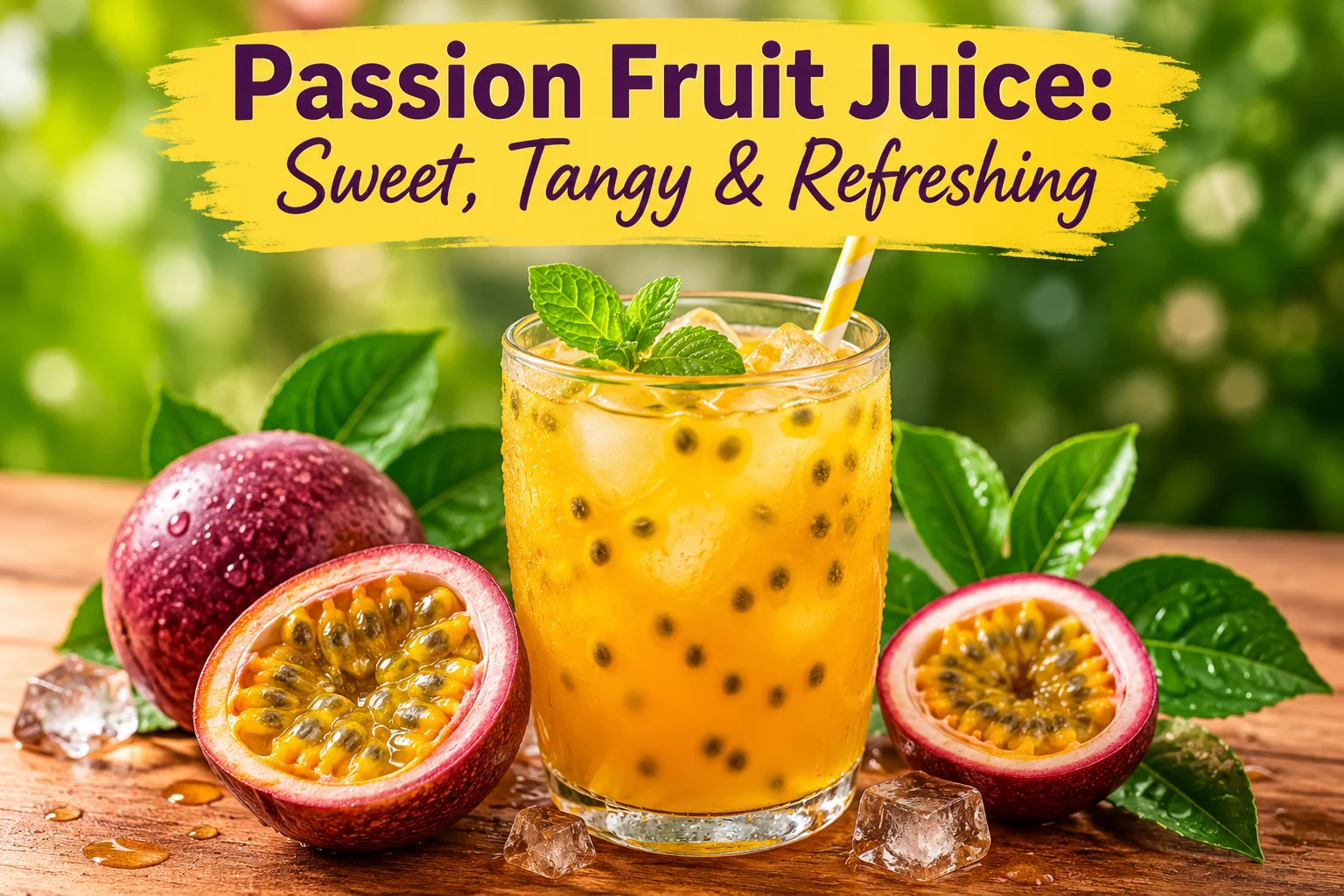
Few tropical beverages manage to capture the vibrant energy of the tropics quite like passion fruit juice. With its electric amber hue, captivating aroma, and dynamic balance of intense sweetness and crisp tartness, this golden elixir is much more than a simple summer thirst-quencher. It is a sensory journey, a nutritional powerhouse, and one of the most versatile ingredients in modern mixology and culinary arts.
The Origin and Profile of Passion Fruit
Passion fruit originates from the tropical regions of South America, primarily Brazil, Paraguay, and northern Argentina. Belonging to the Passiflora vine family, this unique fruit earned its dramatic name from 16th-century Spanish missionaries, who saw symbolic representations of the Passion of Christ in the intricate floral structure of the vine.
Despite its rugged, crinkly outer rind when fully ripe, the interior of the fruit yields a brilliant treasure: soft, gelatinous arils surrounding dark, edible seeds, bursting with fragrant nectar.
Flavor Profile: A Harmony of Contrasts
The taste of passion fruit juice is famously complex. It avoids the flat sweetness of common orchard juices, offering instead a layered flavor experience:
-
Sweetness: Deep, tropical notes reminiscent of mango, pineapple, and peach.
-
Tartness: A sharp, refreshing acidity akin to lime or green apple that instantly awakens the palate.
-
Aroma: Highly floral and intoxicatingly fragrant, often preceding the taste itself.
Health Benefits: Why Your Body Loves Passion Fruit Juice
Beyond its enticing taste, passion fruit juice delivers an impressive array of essential vitamins, minerals, and potent antioxidants. Incorporating this tropical nectar into a balanced diet provides numerous functional health advantages.
High Antioxidant Content
Passion fruit is rich in polyphenols, flavonoids, and Vitamin C. Antioxidants play a vital role in neutralizing free radicals within the body, reducing oxidative stress, and supporting overall cellular health.
Immuno-Supportive Nutrients
A single serving of fresh passion fruit juice provides a significant portion of the recommended daily intake of Vitamin C and Vitamin A. Vitamin C stimulates white blood cell activity to bolster defense mechanisms, while Vitamin A supports healthy mucous membranes and skin integrity.
Dietary Fiber and Digestive Wellness
While strainers are often used to separate the liquid from the seeds, retaining a portion of the pulp introduces helpful dietary fiber. Fiber promotes smooth digestion, supports microbiome diversity, and prevents rapid blood sugar spikes.
Heart Health and Electrolyte Balance
Loaded with potassium and low in sodium, passion fruit juice helps regulate blood pressure levels and supports fluid balance in muscle tissue.
Nutritional Breakdown of Passion Fruit Juice
To better understand the dietary value of fresh passion fruit juice, the following table details the average nutritional content found in a standard 8 oz (240 ml) glass of unsweetened juice.
| Nutrient | Amount per 8 oz (240 ml) | % Daily Value (DV) |
| Calories | 126 kcal | 6% |
| Carbohydrates | 30 g | 11% |
| Natural Sugars | 26 g | — |
| Dietary Fiber | 2.5 g | 9% |
| Protein | 1.2 g | 2% |
| Vitamin C | 70 mg | 78% |
| Vitamin A | 1250 IU | 25% |
| Potassium | 680 mg | 14% |
| Iron | 1.8 mg | 10% |
| Magnesium | 35 mg | 8% |
How to Make Fresh Passion Fruit Juice at Home
Making passion fruit juice at home is surprisingly simple and allows you to control the sweet-to-tart ratio without reliance on artificial preservatives or excess refined sugars.
Ingredients Needed
-
6 to 8 ripe passion fruits (wrinkled rinds indicate maximum ripeness and sweetness)
-
4 cups of cold filtered water
-
2 to 3 tablespoons of sweetener (honey, agave nectar, or simple syrup; optional)
-
Ice cubes and fresh mint leaves for serving
Step-by-Step Recipe
-
Extract the Pulp: Slice each passion fruit in half. Using a spoon, scoop out the aromatic seeded pulp into a bowl or directly into a blender.
-
Pulse Gently: Add 1 cup of cold water to the blender with the pulp. Pulse short, 2-second bursts just enough to separate the yellow pulp from the black seeds without pulverizing the seeds into gritty dust.
-
Strain the Mixture: Pour the blended liquid through a fine-mesh sieve into a pitcher. Use the back of a spoon to press out all the rich juice, leaving the black seed fragments behind.
-
Dilute and Sweeten: Stir in the remaining 3 cups of cold water. Taste the concentrate, and gradually add your chosen sweetener if the naturally tangy profile is too sharp for your preference.
-
Chill and Serve: Pour over ice, garnish with a sprig of fresh mint or a slice of lime, and serve immediately.
Creative Culinary Uses and Mixology Applications
While delicious on its own over ice, passion fruit juice is exceptionally versatile across food and beverage preparations.
Culinary Pairings
-
Marinades: The natural acidity acts as a tenderizer for poultry, seafood, and pork while infusing tropical flavor.
-
Dressings: Whisked with olive oil, mustard, and garlic, it creates an unforgettable salad vinaigrette.
-
Desserts: Passion fruit juice makes an ideal base for sorbets, panna cottas, tarts, and fruit glazes.
Refreshing Mocktails and Cocktails
-
Tropical Passion Fizz: Combine passion fruit juice, sparkling water, a dash of lime juice, and crushed mint over ice.
-
Classic Passion Fruit Margarita: Shake passion fruit juice with silver tequila, triple sec, and fresh lime juice, serving with a salted rim.
Selecting and Storing Passion Fruit
To enjoy the best-tasting juice, selection and proper storage of the fruit are essential.
Selection Tips
Look for fruits that feel heavy for their size. Smooth-skinned passion fruit is safe to buy, but skin with light dimpling or wrinkles indicates peak ripeness, yielding sweeter, richer juice.
Storage Advice
Whole ripe passion fruits can be stored at room temperature for up to 5 days, or refrigerated for up to two weeks. Once squeezed, fresh passion fruit juice should be kept refrigerated in a sealed glass container and consumed within 3 to 4 days, or frozen into ice trays for long-term use.
Passion fruit juice delivers an unmatched sensory experience—a perfect balance of vibrant sweetness, crisp tanginess, and rich tropical fragrance. Nutrient-dense and remarkably versatile, this refreshing drink deserves a permanent spot in your kitchen rotation.
Final Thoughts
Homemade passion fruit juice is a simple way to enjoy a refreshing tropical drink with fresh, flavorful ingredients. With the right balance of passion fruit, water, and sweetness, you can create a delicious beverage at home in minutes. Serve it chilled, add ice for extra refreshment, or experiment with other tropical fruits to create your own signature blend.
Leave a Reply